With the decorations back in the loft for another year and the Quality Street swapped for homemade fruit smoothies and salads, many of us will now have one eye on our summer getaways.
While the booze-fuelled, lie-by-the-pool, eat-tapas-until-you-burst holidays of yore haven't gone anywhere (just ask any Mallorcan hotelier), a growing number of travellers are looking for something different altogether. Industry insights suggest that 2026 will be defined by slower, more intentional travel, with experiences that focus on wellbeing as much as wanderlust. Sustainable travel, spiritual growth and self-care are very much ‘in’ and increasingly form part of the decision-making process when it comes to choosing how and where we travel.
According to Statista, global wellness tourism is on track to be worth around $1.38 trillion in 2029. This marks an increase of more than 54% on the market size from 2024, when global wellness tourism stood at just over $893.9 billion.
Rethinking what wellness actually means
The challenge is that wellness has become a catch-all term.
It can mean everything and nothing at the same time. In reality, most travellers want broadly the same things from a holiday, regardless of what label is attached.
- They want to sleep properly.
- They want fewer decisions to make.
- They want to leave chores behind.
- They want time outdoors.
- They want to feel calmer when they return home than when they left.
‘Wellness’ may be the buzzword of the moment, but the benefit goes well beyond the label.
Sustainable travel is moving from intention to action
‘Sustainable travel’ is also a term that frequently gets bandied about and often appears on lists of what matters most to travellers. Cynics (like myself) might argue that we’re merely paying lip service to the idea of sustainable getaways (referred to as the Say Do gap) and for some, it’s long been more about intention than action.
That may now be starting to change. In the latter half of 2025, searches for ‘sustainable travel’ rose sharply, suggesting a genuine desire to put our money where our mouth is.
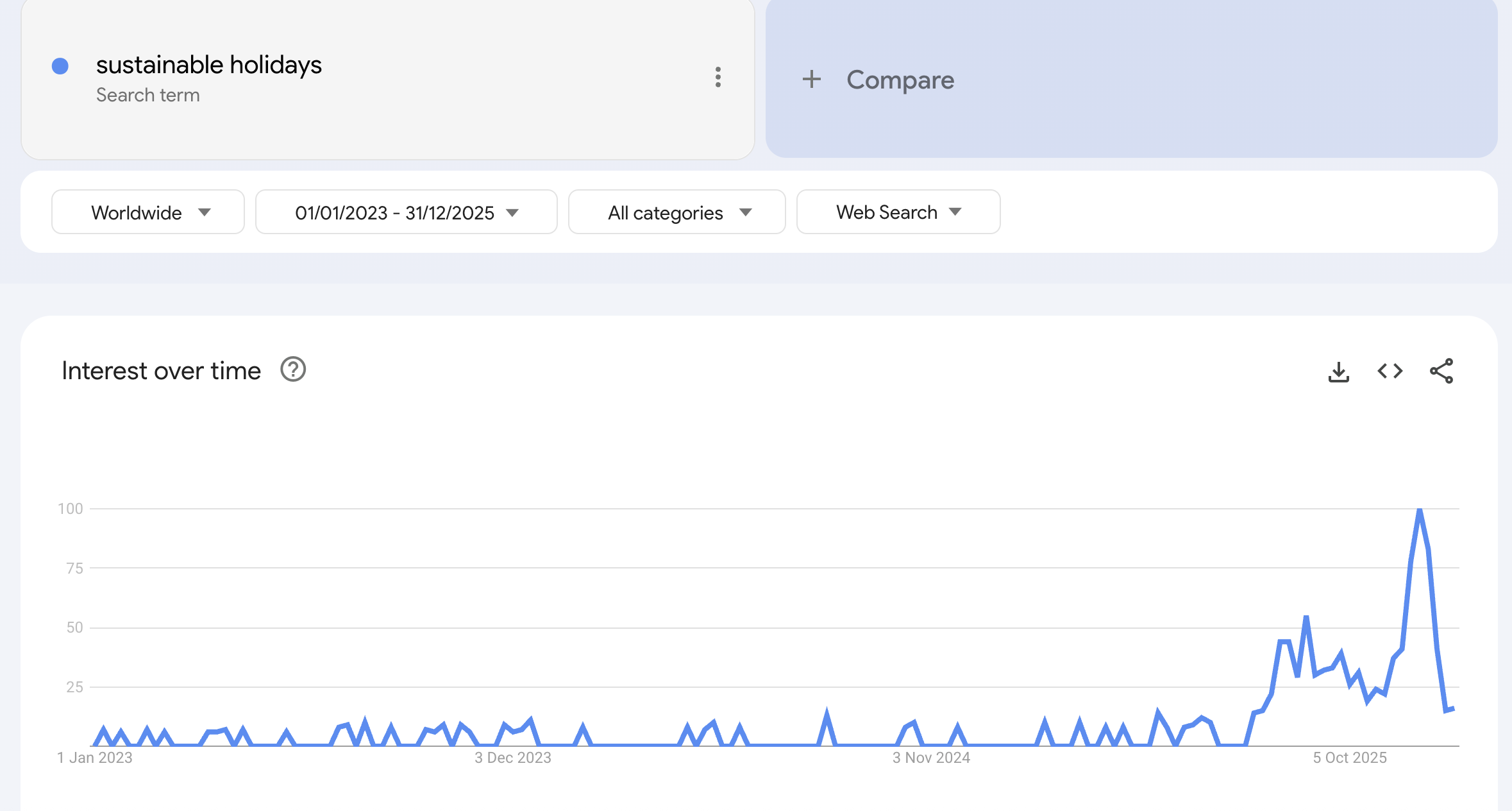
A similar spike was seen for 'eco travel’, reinforcing real interest rather than passive approval.
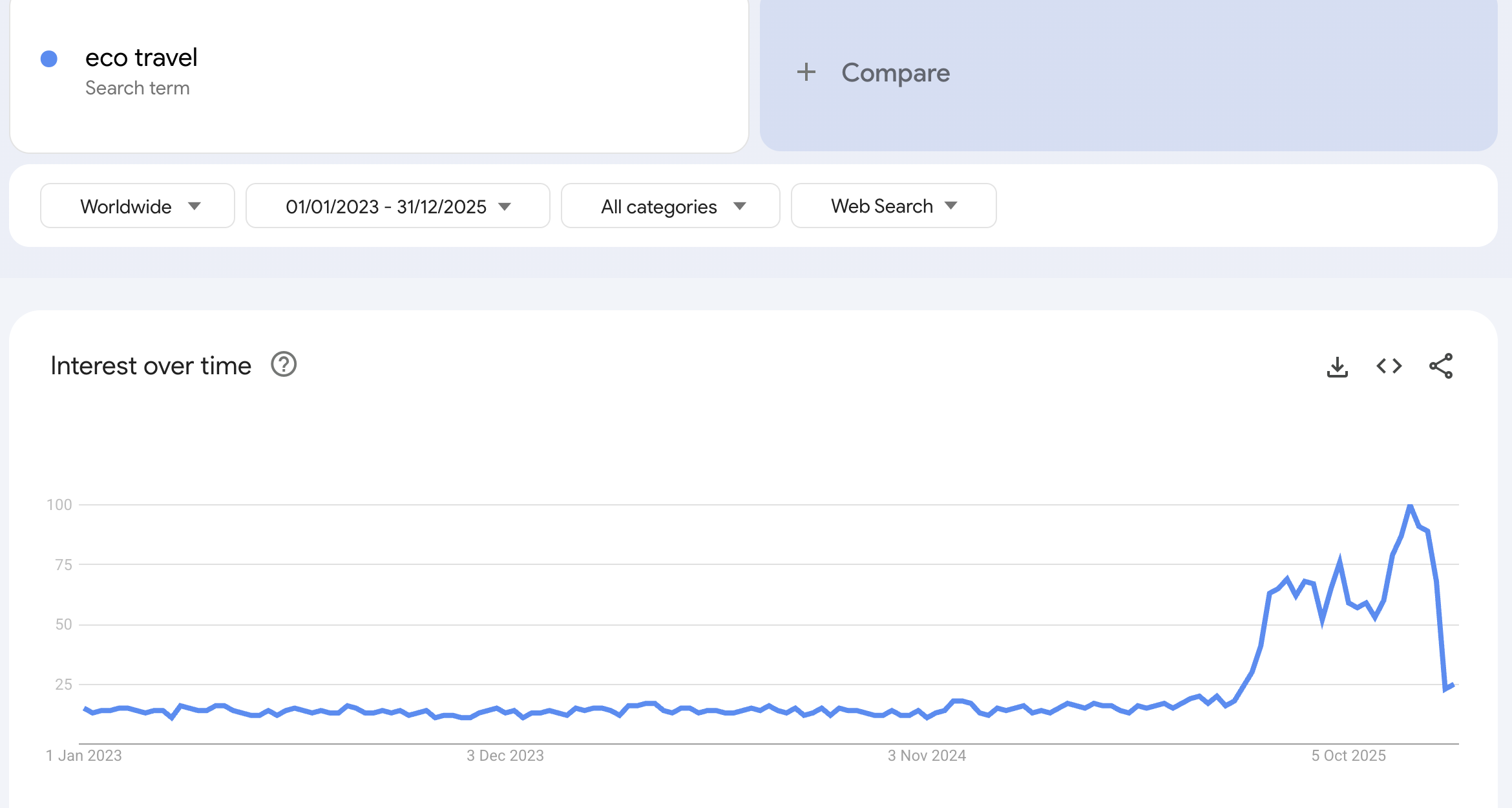
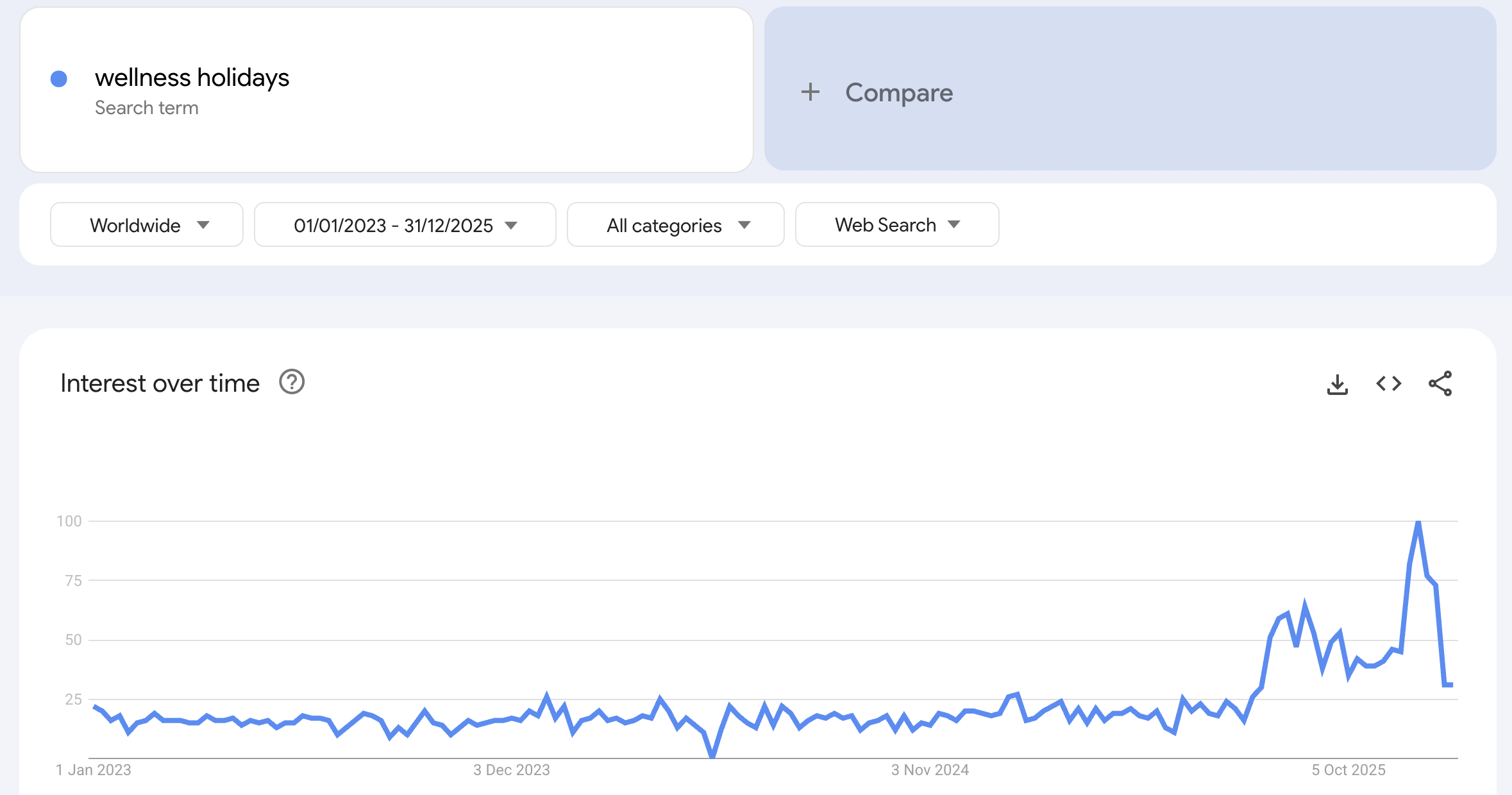
What’s particularly telling is that the two graphs above from Google Trends mirror an almost identical spike in searches for ‘wellness holidays’, again towards the end of last year.
Sustainability, for many travellers, isn’t about making sacrifices elsewhere. In practice, sustainable travel and wellness are often two sides of the same decision. Fewer flights, longer stays or travelling time and quieter locations reduce environmental impact, but they also strip away many of the stressors that make modern travel exhausting. Slower travel isn’t just kinder to the environment - it’s easier on the nervous system.
This aligns with the rise of ‘quietcations’ or restorative travel, where comfort, silence and detachment from constant digital connectivity are key motivations for booking a trip.
Speaking to the BBC last month, Hector Hughes, co-founder of Unplugged, a series of digital detox cabins in the UK, notes how dramatically motivations have changed since launch:
"When we first started Unplugged in 2020, digital detoxing and analogue living was pretty much unheard of. Now, over half of our guests cite burnout and screen fatigue as their main motivation for booking”
Who is driving demand?
Travellers aged 25 - 34 are leading growth, with 90% of people in this age bracket citing mental health and wellbeing as their reason for going on holiday. This demographic consistently seeks out trips that will deliver something tangible beyond simply ‘sun, sea and sand’.
There’s also a rise in multi-generational family wellness, where trips are designed to work across ages. This demonstrates a shift away from adult-only retreat models towards shared experiences that support healthier habits for everyone involved.
And of course, solo travellers are feeding into the trend too, with more than one in four planning to travel alone in 2026 and nearly half intending to add solo travel days to their itineraries – aligning with a preference for quieter, more reflective experiences that prioritise autonomy, self-care and rest. It’s worth noting that these solo travellers aren’t just made up of singletons, but people with partners, spouses and families too.
What travellers want in 2026
The strongest growth is in travel that removes friction. Trips with:
- quieter environments
- slower pacing
- fewer locations per journey
- built-in rest rather than jam-packed itineraries
- optional, not compulsory, activities
There’s also a clear move towards social wellbeing with more than a third (39%) of global travellers having gone, or considered going, overseas specifically to meet new people. Communal spaces, shared rituals, group experiences and informal connection are becoming as important as treatments, spas or programmes. Remote working and digital saturation are driving a desire for connection, particularly among the Gen Z demographic.
What this means for travel marketers
For marketers, it’s important to look beyond labels and buzzwords like ‘hushcation’ or ‘slowcation’ and design trips that make space for wellness and self-improvement to happen naturally.
That means:
- fewer rushed itineraries
- clearer, calmer choices
- honest framing around pace and impact
- experiences that encourage connection with place and people
The key takeaway is simple. Wellness will sell best in 2026 when it feels organic rather than overly-engineered.