Welcome to our round up of the latest SEO news. These are the stories that have caught our eye over the past month.
1. August Spam Update
Google rolled out another Spam Update in August, beginning on the 18th and completing just under three days later. The update applied globally and across all languages, although Google didn’t reveal any particular type of spam it was targeting this time around.
This update did end up causing some waves in the SERPs though. SE Ranking analysed 100,000 US keywords across 20 industries and found that 16.7% of URLs previously ranking in the top 10 dropped beyond position 100 during the update. For comparison, just 9.2% did the same during a similar period in July when no update was confirmed.
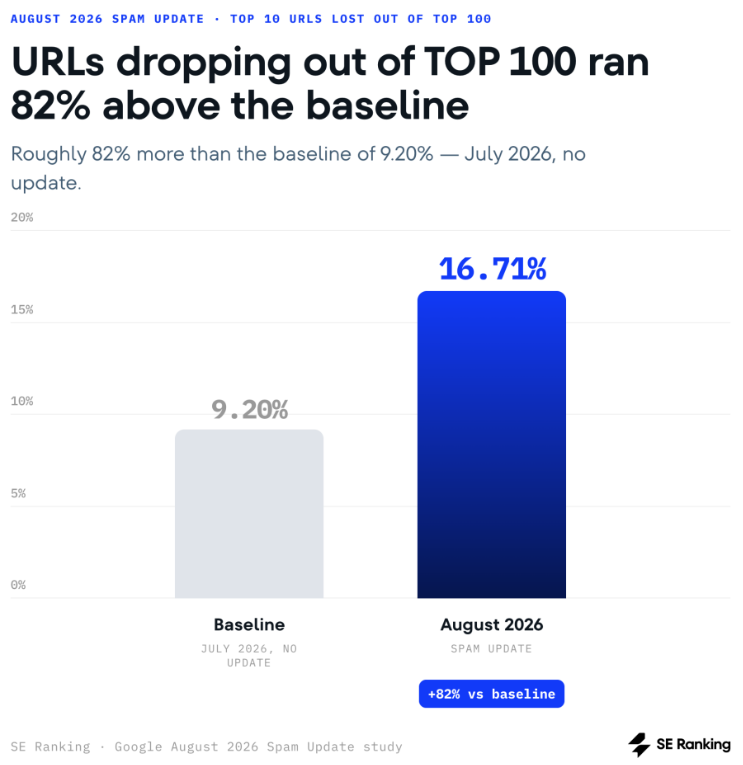
It’s important not to jump to conclusions about what Google was targeting though, as the study looked at ranking changes rather than specific websites or tactics affected. Google’s existing spam policies do make it clear that producing large amounts of low-value content purely to rank can be considered scaled content abuse, whether than content is written by humans or AI.
2. AI reporting in Search Console
Google has made it easier to see whether your content is appearing within its AI search features. After initially testing its generative AI reporting with a smaller selection of websites, Google confirmed that the feature had rolled out globally.
The report can show impressions generated through features such as AI Overviews and AI Mode, alongside information about which pages are appearing and where those impressions are coming from. This means we should be getting a clearer view of the content Google is choosing to display within generative search.
There are still some gaps though! Unlike the usual Search Console Performance report, we don’t get query-level AI data alongside clicks and clickthrough rates, so it’s still difficult to understand exactly what someone searched or whether an AI appearance led to a website visit or conversion. At least it gives us something new to work with.
3. AI Mode moves further into travel booking
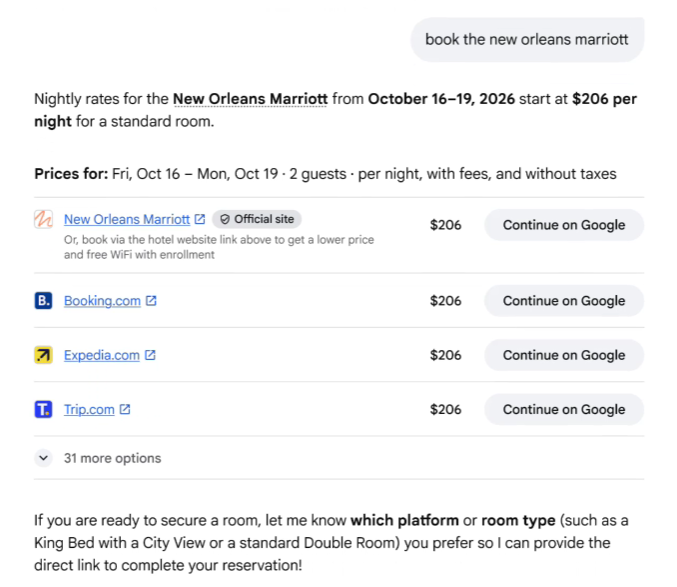
Google is pushing AI Mode further into the travel booking journey with three new travel features announced, including:
- Flight price tracking
- Costs in points or miles
- The ability to book hotels through AI Mode
This means AI Mode is moving beyond simply helping travellers decide where to go and closer to handling the booking itself. Travellers do already seem comfortable using AI throughout the research process, so is this going to be a popular feature?
Phocuswright found that almost nine in ten AI-using travellers across the UK, France and Germany said AI had influenced a real trip decision. Among US users, 39% used AI for hotel research while 53% used it for real-time recommendations while travelling.
Actually booking through AI may be a different story though. Travelport found that while 53% of US consumers would trust AI to recommend the best flight, 72% said AI-powered travel booking caused them some level of stress and anxiety. Among people already using AI for travel, 32% used it to research prices and options but only 8% had used it to make a booking.
For now, AI appears to be gaining trust much faster for travel inspiration and research than for taking people’s money. Travel brands still should aim to be visible during those early stages though, particularly as the journey from research to booking becomes less straightforward.
4. Google starts automatically expanding some AI Overviews
Google is giving AI Overviews even more space on some search results (as if it didn’t have enough already!). Instead of showing a shorter answer with a ‘Show more’ button, Google has started automatically expanding some AI Overviews on the SERP. You’ll also be assaulted by the AI Mode chat box inviting you to Ask anything.
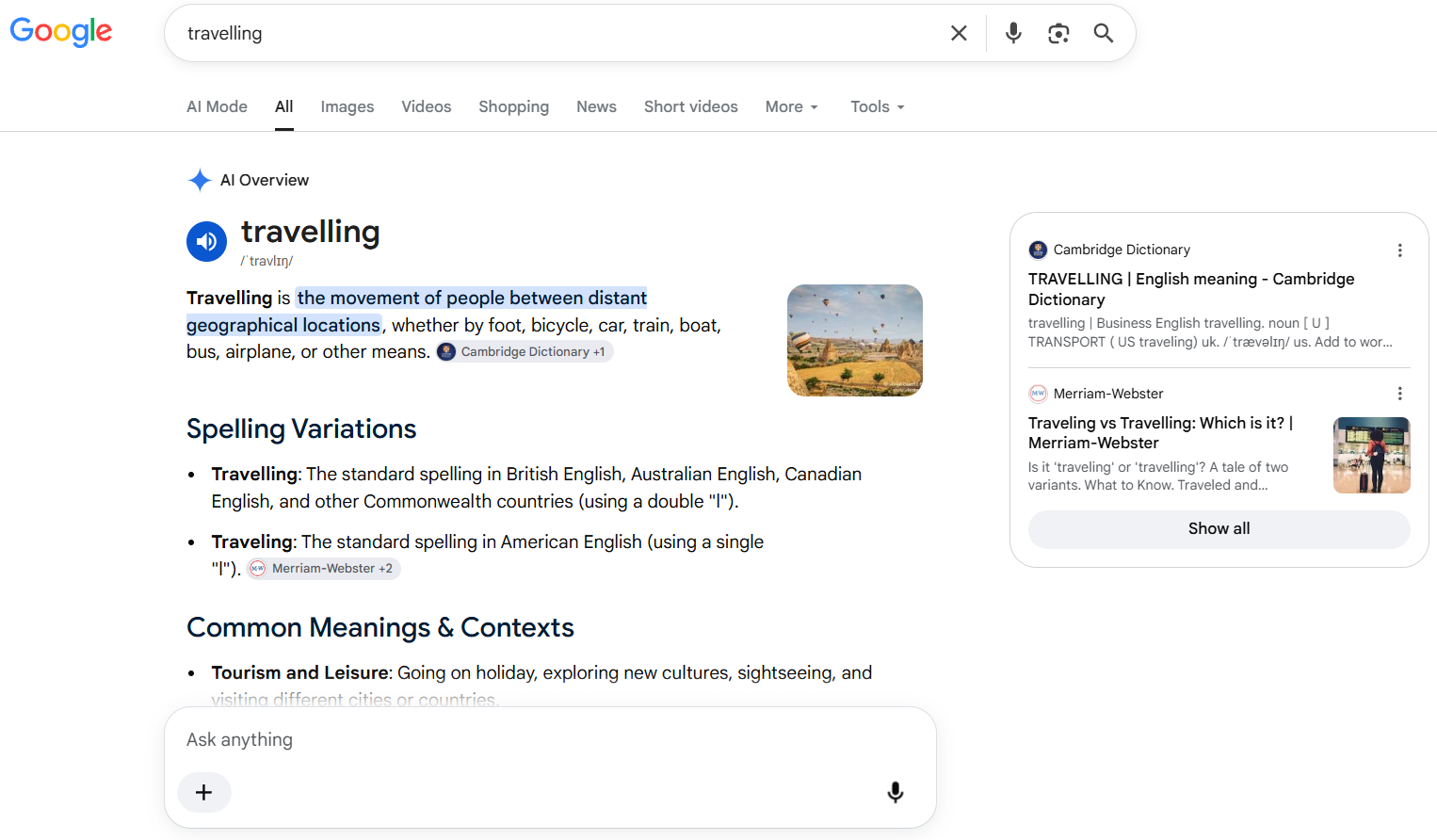
It won’t appear on every search, and Google has stated that this will only happen when its systems think the expanded answer will be particularly useful. But when it does show up, users will see a much larger AI-generated response before scrolling to reach the traditional organic listings. This means pages ranking in position one for those queries will appear much further down the SERP than they would have done previously.
If your strategy is to jump on the bandwagon and focus on getting mentioned in these AI responses, you might be happy to hear that AI citations aren’t reserved solely for huge domains. A study from Featured analysed 22,881 citations and found that 34.5% came from websites with a Moz Domain Authority score below 40. Its worth noting that this research looked at Perplexity rather than Google AI Overviews, but it still suggests smaller and more specialist websites can earn visibility within LLMs.
However, we still don’t know exactly which queries are most likely to trigger these expanded AI Overviews! For now, it’s another SERP change worth keeping an eye on as Google continues to give AI-generated answers more real estate.
That’s all for now – see you next month!


