Welcome to our round up of the latest SEO news. These are the stories that have caught our eye over the past month.
1. Google’s June Spam Update and completed May Core Update
The Google updates don’t stop coming and June wasn’t an exception. The May 2026 Core Update wrapped up on 2 June, with a June Spam Update rolling out shortly afterwards from 24 – 26 June. So if you noticed a bit of movement in the rankings last month, there’s a good chance one of these updates may have been involved.
As usual, the chunky Core Update’s aim was to improve the quality and relevance of search results, which means some pages may gain visibility while others drop back if Google’s systems decide there are more useful results to show. The Spam Updates are slightly different since they focus more directly on low-quality or manipulative tactics, such as spammy content and pages that don’t offer much genuine value. This rollout was fairly speedy, lasting just over two days, but still may have caused volatility for some sites.
2. Zero-click searches hit 68% in 2026
One of the biggest SEO talking points this month was a new study showing that fewer than one third of Google searches now result in a click. According to SparkToro, 68% of Google searches in the US ended without a click in the first four months of 2026. That’s up from 60% in 2024, which is a pretty big shift in just a couple years!
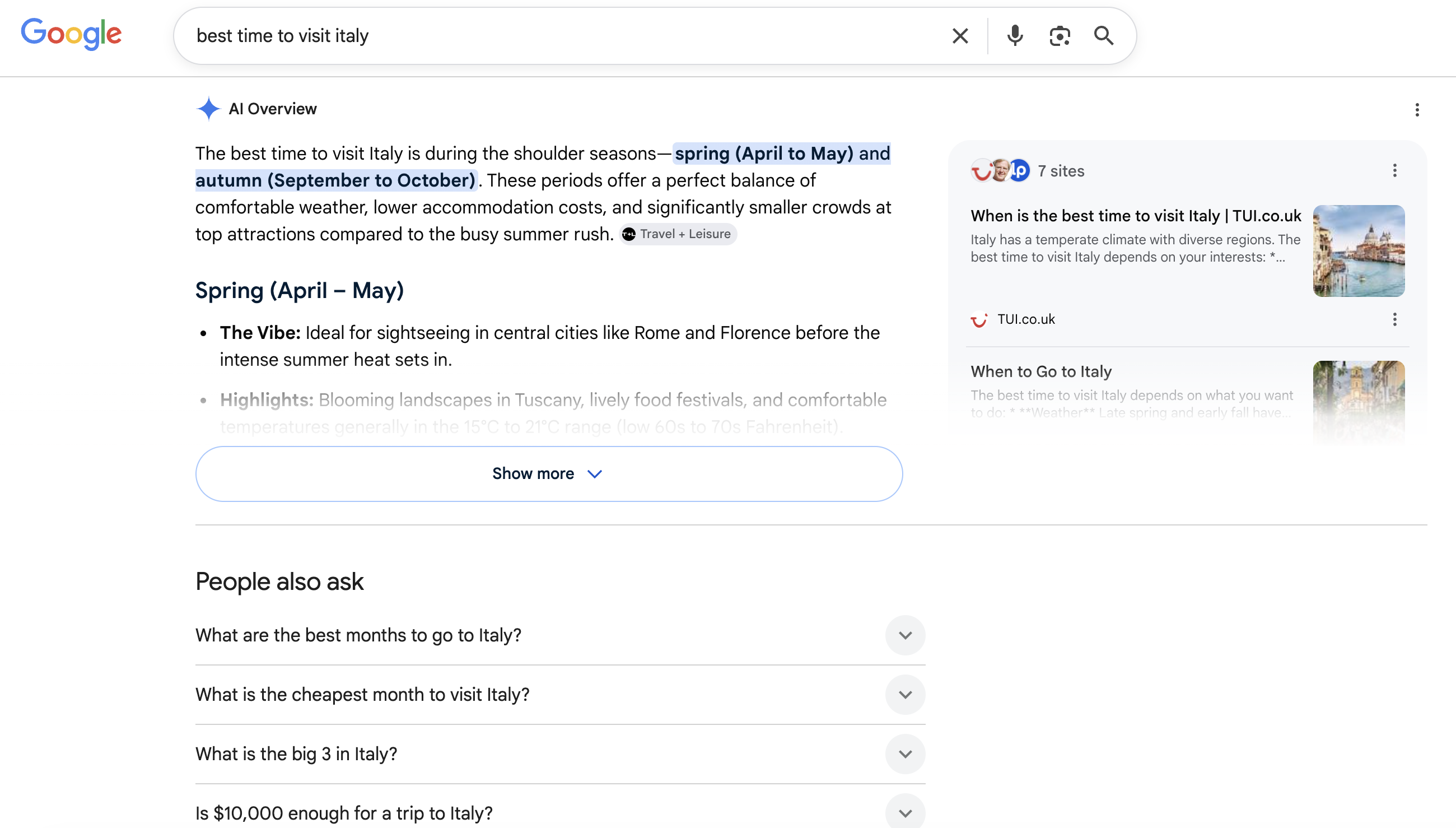
The Google SERPs paint a pretty clear picture as to why people are clicking less… When searching for something like 'best time to visit Italy’, we see AI Overviews right at the top answering the query in full, there’s People Also Ask boxes to expand on more questions and only after that sit the website links. Other queries may trigger Google Business Profiles, maps or images, featured snippets and other search features popping up, meaning users can get what they need without ever clicking through to a website.
This does make things more complicated but if people are spending more time on the SERPs, maybe that’s where we should focus our efforts as well. Investing in brand awareness and visibility across the web and platforms where your audience is already spending time will become important, whether you directly gain clicks in the moment or not.
3. AI visibility reporting arrives in Google Search Console and Bing Webmaster Tools
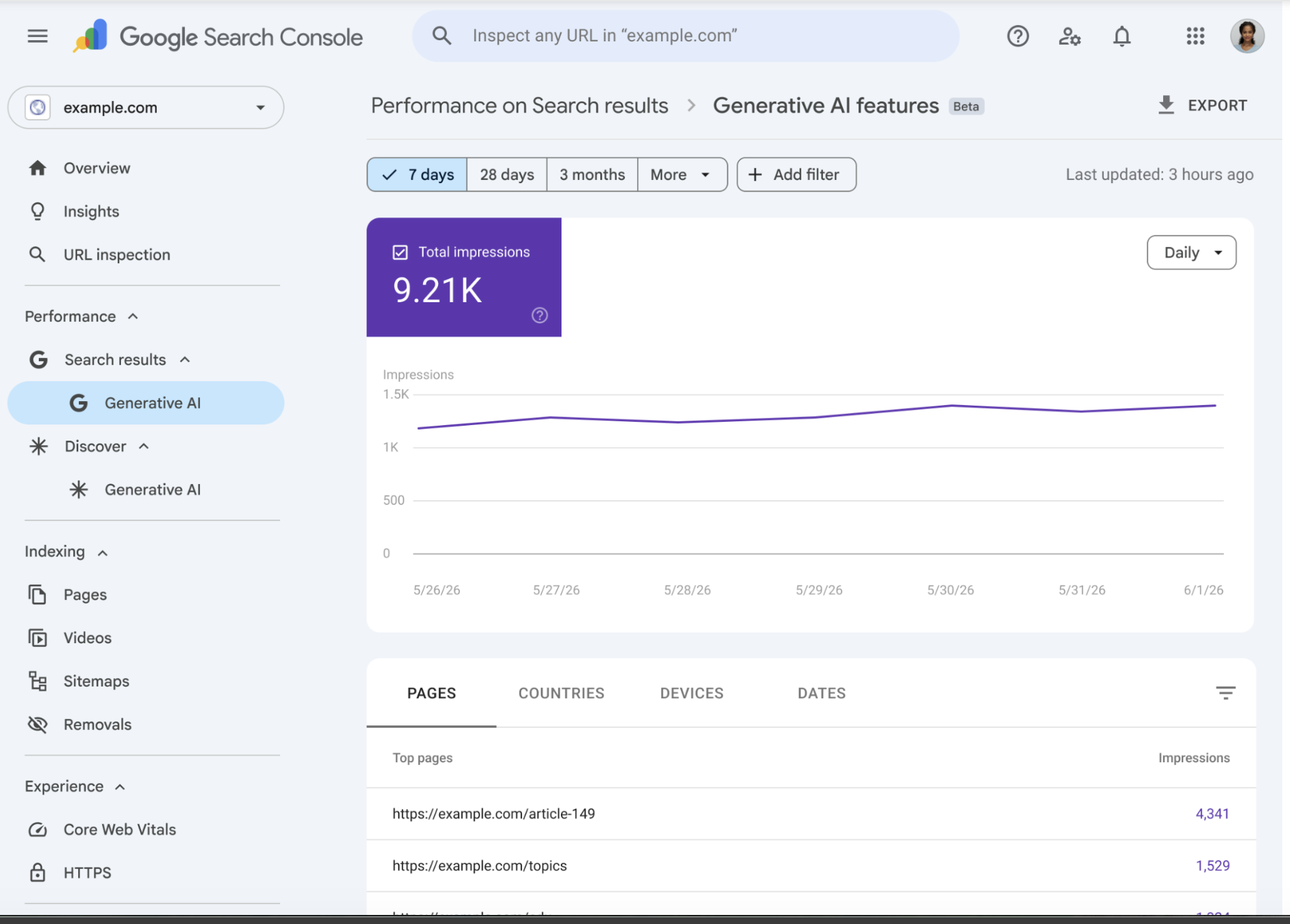
June has brought something a little more practical to the world of AI search: reporting. Google introduced Search Generative AI performance reports in Search Console, giving us more visibility over how content appears in generative AI features such as AI Overviews, AI Mode and Discover. These reports can include data around impressions, pages, countries, devices and dates, although they’re currently only being rolled out to a subset of websites.
Bing also introduced new AI visibility insights in Bing Webmaster Tools, including Intents, Topics, Citation Share and Compare. This is to help us understand where content is being cited in AI-generated answers, what topics we’re appearing for and how visibility compares with competitors.
These new reports are a welcome sign that AI search visibility may be becoming more measurable, but they still don’t tell the whole story. Google’s report is still missing clicks, clickthrough rate and query-level data, while Bing’s reporting is more detailed but still limited to the Microsoft ecosystem and based on AI-generated grounding queries rather than the exact questions users asked. This means AI visibility needs to be measured alongside analytics, enquiries, bookings, reviews, PR coverage and brand sentiment to look at the bigger picture, not just in isolation.
4. AI traffic to travel sites has exploded
According to Adobe, AI-driven traffic to US travel websites increased by 194% year on year in May 2026. That’s a massive jump! The interesting part is also the behaviour of these visitors, who seemed to be 21% more engaged, spent 70% longer on the site and had a 41% lower bounce rate compared to non-AI traffic. It’s not all sunshine and rainbows though, since they still converted 28% less than traditional traffic – you can’t have it all…
This makes sense for travel. People are using AI tools to compare destinations, plan itineraries, find excursions and narrow down their options before visiting a travel website. By the time they arrive, they may already have a clearer idea of what they want, which could explain why they spend longer browsing and engage more deeply with the content.
For travel brands, creating content and advice that’s easy for both humans and LLMs to understand could be important if this behaviour continues to grow. This would look like clear headings, useful summaries, structured content and genuinely helpful travel information.
That’s all for now – see you next month!


