Welcome to our round up of the latest SEO news. These are the stories that have caught our eye over the past month.
1. Google Search Console can now track social and video platforms
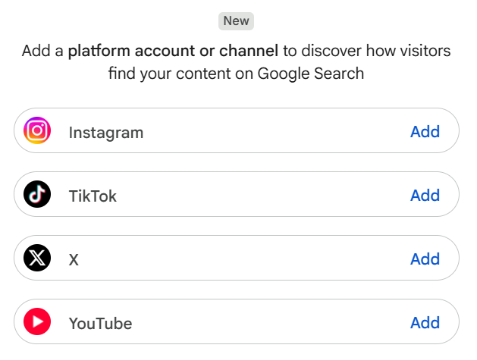
Google Search Console is branching out beyond websites. In July, Google introduced platform properties, which allows brands to track how content from Instagram, TikTok, X and YouTube is performing across Google Search, Discover and Google News.
You’ll be familiar with the usual Search Console data included in these reports, such as clicks, impressions, queries and countries but this time, it’s linked to individual social posts and videos. This means brands can see which Instagram Reels are appearing on the SERP, what people are searching before finding a YouTube video or whether an old TikTok started gaining visibility again.
This is different from the analytics available within the social platforms themselves which show you engagement and view insights solely on the app. Google Search Console now peels back the curtain to reveal how people are discovering your content off-app and through Google search. Social content may become a bigger part of SEO with posts and videos now being treated as searchable content in their own right.
2. Google AI Mode passes one billion users (allegedly) as ads expand
During Alphabet’s latest earnings call, Google announced that AI Mode had passed one billion monthly active users, following its expansion into more countries over the past year. They also claimed that its AI search features are now sending billions of clicks to websites every week.
While those numbers sound extremely positive, it’s worth keeping in mind that they come directly from Google themselves. There’s no breakdown or proof of which websites are receiving these clicks or whether users are going on to book or buy anything. If we take their word for it, reaching one billion users suggests conversational search is quickly becoming part of the norm in the Google experience.
Unsurprisingly, Google is also finding ways to monetise it. A study from SE Ranking tested more than 50,000 commercial keywords and found that ads appeared in 29% of AI Mode results. When the ads did appear, 71% of the results included two competing advertisers. Interestingly, paying for an ad didn’t usually mean that the same business was cited in the AI-generated answer, suggesting that paid and organic visibility are two separate battles, just like the regular SERP.
Travel was one of the more active industries in the study, with an ad presence of 50% against the 29% average! Travel brands may need to consider investing in ads for immediate commercial exposure while continuing to build useful content and brand visibility if they also want to be recommended naturally.
3. AI Overviews move further into the research journey
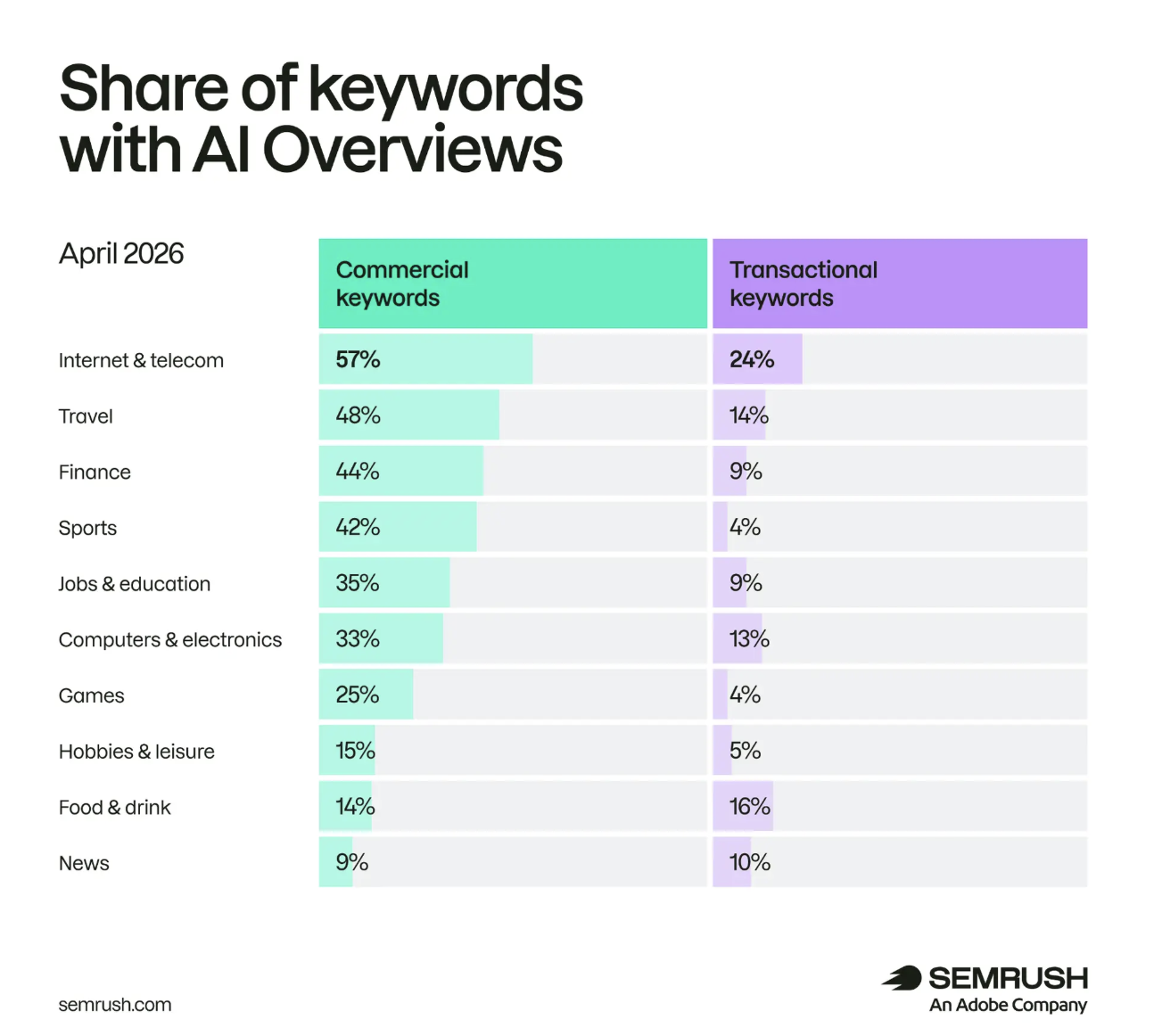
For the past six months, AI Overviews have been sneaking onto the SERPs beyond basic informational queries and further into the part of the journey where people compare their options. Semrush found that AI Overviews on commercial searches increased by 71% over this time period.
For travel, this could include searches such as 'Maldives or Mauritius for honeymoon' or 'best Greek island for families'. These are the kinds of queries where Google can now provide a detailed summary before the user reaches a travel website. Travel had a high share of commercial keywords with AI Overviews at 48%, while the Overviews only appeared for 14% of transactional keywords.
Social content is also becoming a part of the picture. BrightEdge estimated that social media appeared as a source in roughly one in every 15 AI Overview searches within its dataset. Facebook was the most common platform overall, while Instagram appeared particularly often for lifestyle, culture, food and travel-related topics, such as 'ferry to Amalfi Coast'. Travel brands looking to utilise social media to improve their AI visibility may want to prioritise inspirational, visual content on Instagram.
4. UK travel intentions dip but food and cultural experiences remain popular
UK travellers appeared to become slightly more cautious in July. VisitBritain’s latest Domestic Sentiment Tracker found that 74% of UK adults intended to take a domestic overnight trip within the next 12 months, down from 77% in July 2025. This doesn’t mean people have suddenly lost interest in UK breaks, but it does suggest that affordability and confidence are having an impact with the biggest barriers to booking being:
- The UK weather
- The rising cost of living
- Concerns about personal finance
Also, it’s good to keep in mind that travel intention isn’t the same as completed bookings. People may still travel but instead of planning in advance, they might book a spontaneous trip closer to home or something with a last-minute deal.
There was still plenty of interest in experiences, particularly around food and culture. Among those planning a UK trip between July and September, 43% wanted to try local food and drink. Heritage sites, cultural attractions and family activities also remained popular.
For UK travel businesses, this gives us a good indication of the content people may find useful. Regional food guides, affordable restaurant recommendations, historic walking routes and free museums can all help travellers plan a break (without breaking the bank). A top tip is to include practical information too, such as prices, opening times and booking requirements, which could make travel content that much more useful when someone is deciding whether a trip feels worth the money.
That’s all for now – see you next month!


