Your website looks great. Fresh content, images to die for, super UX, ticking all the EEAT boxes.
So why are you nowhere to be seen when someone asks ChatGPT, Gemini and co for related recommendations?
It’s a question we’re hearing more often from travel brands. As ever, there’s no single answer, but one thing is clear. The way people find, compare and shortlist travel options is changing.
Travellers aren’t always clicking through five or six websites to gather information in the way they once did. For some searches, they’re now being shown summarised answers, suggested sources and comparison-style information before they ever land on a website.
That doesn’t mean SEO has stopped mattering - far from it. Much of what’s now being called GEO, or Generative Engine Optimisation, is really just SEO done properly: crawlable pages, useful content, clear structure, trusted expertise and a brand that’s easy to understand.
The difference is that those signals now need to work harder across more places, not just your own website.
A trendy new acronym…but what does it mean for search?
LinkedIn has been awash with GEO tips for a couple of years now. Some of it is useful, but most of it feels like SEO in a fake moustache and sunglasses. As is the norm with the latest trends, people are quick to take sides.
‘Traditional search is dead! The future’s AI, baby!’
‘It’s just SEO with a slightly different name!’
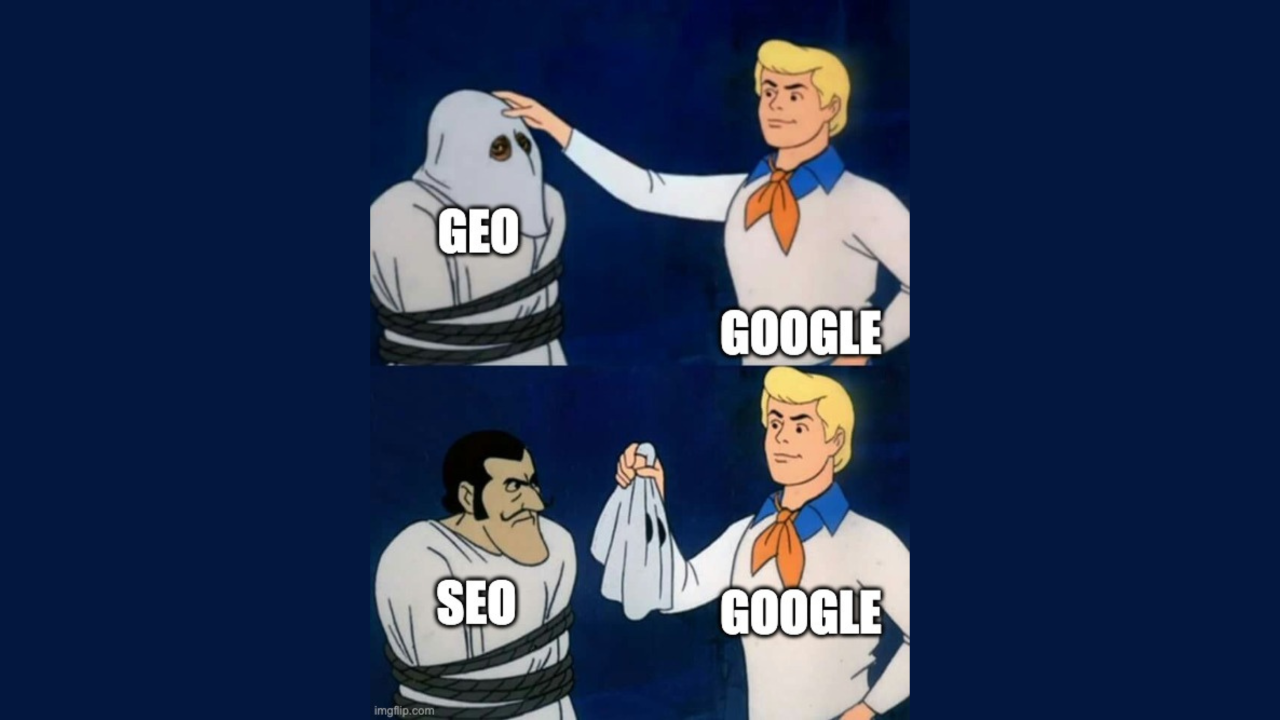
I lean more towards the latter. Google’s own guidance makes it clear that SEO still matters for generative AI features in search. Its AI Overviews and AI Mode are rooted in its core search ranking and quality systems, which means the familiar foundations still count, i.e. crawlable pages, useful content, clear structure, technical accessibility and a site that people can actually use.
So when people talk about GEO, much of the sensible advice suggests it’s really just SEO done properly (which is often a lot harder than it sounds). But it’s now more important than ever for your content to be clear enough to answer the original query and the related questions AI tools may explore around it.
Travel searches rarely stop at the first question
Holiday planning is full of follow-up questions. Someone searching for the ‘best time to visit Costa Rica’ may also want to know about rainy seasons, wildlife, regional differences, school holiday prices, flight routes, beach stays and whether the Caribbean or Pacific coast is better at that time of year.
This is where AI Mode’s query fan-out comes in. In simple terms, its model can look beyond the original search and explore related questions to build a fuller answer. That means travel brands’ content needs to cover a topic properly, not just skim the main query. A useful destination page should answer the obvious question, then help with the decisions that naturally come next.
This doesn’t mean creating hundreds of thin pages for every possible search variation. Google is clear that creating lots of content mainly to manipulate rankings or AI responses can fall foul of its spam policies. The better approach is to build genuinely useful pages that help travellers compare, plan and decide.
AI results don’t always mirror Google rankings
One of the biggest misconceptions is that if you rank on page one, you’ll automatically appear in AI-generated answers.
Oh, if only it were that simple.
LLMs don’t simply copy the top organic results. Depending on the platform and query, they may pull together information from a wider set of sources, including websites, business profiles, review platforms, travel publications, forums, destination authorities and other third-party references.
That means a travel brand can rank well for a destination guide and still be absent from the AI answer sitting above, alongside or instead of the usual search results.
For informational travel searches, this is important because the AI answer may satisfy part of the user’s query before they click. Someone asking ‘best time to visit Costa Rica’, ‘where to stay in Seville with young children’ or ‘is a cruise or land tour better for the Galápagos’ may get enough from the summary to narrow their options without visiting every source listed.
That’s a reason to make your SEO work harder, rather than giving up on it.
Your content may be lovely to read but hard to extract
Travel copy often has a certain style. It paints a picture. It sells a dream. It talks about sparkling waters lapping soft white sands, charming coastal villages, unforgettable experiences and cuisine worth gaining a few extra pounds for.
There’s undoubtedly a place for that. Travel is typically an emotional purchase and that needs to be tapped into when creating content.
But LLMs favour clean, specific information they can understand, compare and reuse. A paragraph saying a destination has ‘something for everyone’ doesn’t give them much to work with. A section explaining that a region suits families with older children, works best from May to October, needs seven to ten nights and is suited to a beach stay is far more useful.
This is where many travel websites can improve rapidly. Your content needs to answer the questions real travellers ask when they’re narrowing down choices, not just browsing for inspiration.
That includes things like:
- Who is this destination right for?
- How long should you stay?
- When is the best time to go?
- Which area should you choose?
- What type of traveller might not enjoy it?
- How does it compare with another destination?
- What’s included?
- What costs extra?
- What do your specialists recommend?
This makes useful human advice easier for machines to understand, without losing sight of the person reading it.
Your opening paragraphs may be too vague
If your destination page opens with generic hero copy, an LLM may have to work harder to understand what the page is actually useful for. If it opens by clearly explaining who the destination suits, what the page helps with and what type of trip you specialise in, you’re giving both search engines and AI systems a much clearer signal.
For example, instead of:
‘The Maldives is a dream destination of white sand, turquoise water and world-class resorts’
Try something more useful:
‘The Maldives is best suited to travellers looking for island-based relaxation, luxury 5-star resorts, snorkelling, diving and honeymoon-style stays. This guide explains when to go, how to choose an island and what to consider before booking’
It’s less evocative, but it’s much more useful. And research from LLM expert Kevin Indig outlines this perfectly by highlighting that 44% of citations from LLMs come from the top third of a web page. That is to say, LLMs often don’t bother to read your whole page to get the info they want.
And really, this is simply good SEO. Clear intent, clear topic, clear value to the reader.
Your brand signals may be inconsistent
LLMs may scrape their answers from a wider set of sources than your website alone. That means consistency matters. If your website says you’re a tailor-made luxury travel specialist, your Google Business Profile says you’re a tour operator, your social bio talks mainly about honeymoons and your third-party listings describe you as a general travel agency, the picture can become blurred.
None of those descriptions might be wrong. But together they may make it harder for AI systems to understand what your brand should be recommended for.
For travel brands, clarity matters at every level:
- Your brand name
- Your locations
- Your destinations
- Your specialist areas
- Your audience
- Your travel styles
- Your reviews
- Your author and expert profiles
- Your third-party listings
- Your structured data
If you’re a specialist in tailor-made Latin America holidays, for example, say that clearly and consistently. If you’re strongest on luxury family villas in the Med, make that obvious. If you’re known for small-group adventure travel, don’t bury it.
AI systems can’t recommend you confidently if they can’t figure out what you are.
You might not have sufficient authority beyond your own website
Your own website is important, but it’s only part of the picture.
If respected travel publications, destination sites, review platforms, partners and customers also talk about your brand in relevant ways, that gives AI systems more supporting evidence to work with.
This is where SEO and PR are becoming harder to separate. Owned content explains what you do. Earned coverage helps show that other people recognise it too.
For travel businesses, it’s about being present in the places that matter to your audience and your niche. Useful third-party visibility might include destination features, expert commentary, awards, reviews, guide inclusions, podcast appearances, YouTube interviews, partner content or mentions in specialist travel media.
Your site could be blocking AI crawlers
Some AI visibility issues are technical. If certain crawlers can’t access your content, your pages may be ineligible or less likely to appear in some AI search experiences.
It’s worth reviewing:
- Robots.txt rules
- Noindex tags
- Canonical tags
- Bot protection settings
- CDN or firewall rules
- Blocked JavaScript-rendered content
- Useful copy hidden behind forms, tabs or booking widgets
This is classic technical SEO. The bot names may be newer, but the principle is familiar: if important content can’t be crawled, parsed or indexed, it can’t do much work for you.
You may be measuring the wrong thing
Rankings, impressions, clicks and conversions still matter, but they don’t tell the whole AI visibility story.
A useful starting point is to create a simple prompt log. Choose 10 to 30 questions your customers might realistically ask and run them across Google AI results, ChatGPT and Gemini, etc. on a regular basis.
Include a mix of commercial, comparison and planning prompts, such as:
- ‘Best luxury tour operators for Barbados’
- ‘Is Kenya or Ghana better for wildlife?’
- ‘Best family holiday destinations in Europe in August’
- ‘Two-week Japan itinerary for first-time visitors’
- ‘Best small group tours for solo female travellers over 50’
Track whether your brand appears, whether competitors appear, what sources are mentioned and what type of content is being used.
Consider the following:
- Are you being mentioned or cited?
- Are people clicking through from AI tools?
- Are AI bots able to crawl your content?
Those are related, but they’re not the same. A brand mention doesn’t always lead to a visit. A lack of AI referral traffic doesn’t always mean you’re invisible. And a site that blocks crawlers may struggle before content quality even comes into play.
What travel brands should do next
Despite what LinkedIn ‘experts’ may tell you, there’s no guaranteed way to elbow your way into AI results, and anyone promising that should probably be treated with a massive dollop of salt.
But there are plenty of sensible ways to make your site and brand easier to crawl, understand, trust and cite.
Start with your most important destination, tour and guide pages. Make sure each one answers a real travel planning question clearly. Add specific detail where the copy is too generic. Include expert commentary from people who actually know the destination. Use structured headings, comparison tables and FAQs where they genuinely help.
Keep your content fresh, especially where prices, entry rules, seasons, flight routes or local conditions are involved.
Then look beyond the page. Are your brand signals consistent? Are your specialists visible? Are you being mentioned in the right places? Can AI tools understand what you do, where you do it and why someone should trust you?
If all these recommendations sound very familiar, then you’re probably already pretty well-versed in SEO best practices.
GEO might sound like another thing to add to the marketing to-do list. In reality, most of it comes back to something more familiar: better SEO, better content and a clearer brand footprint.
If you need a helping hand with your SEO, content or AI visibility, we can help you separate the useful stuff from the waffle and focus on the changes that genuinely make a difference. Get in touch with the Adido team today to find out where your travel brand stands and what to tackle next.


