‘Traditional travel search is dead! Long live TikTok, YouTube, Reddit, ChatGPT, etc etc.’
You may have heard similar hyperbolic claims doing the rounds on LinkedIn, predicting that the end is very much nigh for Google, with all those ultra tech savvy Gen Z folk swapping search engines for AI and social media in their droves.
First things first. Google is very much not dead. The tech giant processed FIVE TRILLION searches last year, the highest in their history. The figures still do the talking and when Google says jump, those of us in digital marketing continue to say ‘how high?’.
That said, there’s little doubt that when it comes to how we search for holiday inspiration, Google is no longer the only player at the table.
Travel inspiration starts before the first Google search
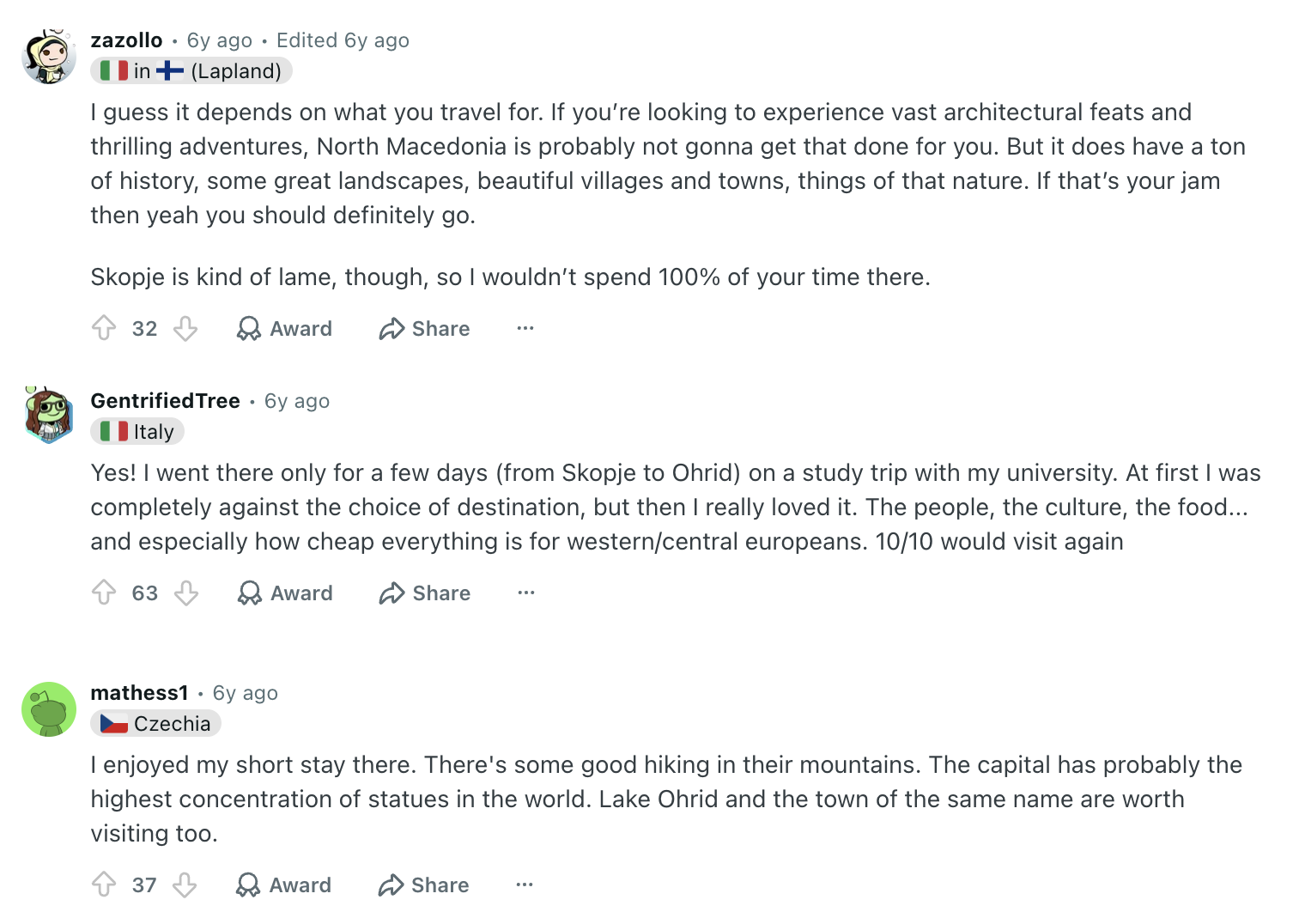
Nowadays, travel inspo starts long before anyone opens a search engine. It starts with a TikTok someone might watch on a rainy commute to work, a YouTube video about Cancún, a ChatGPT prompt asking where to go for a week in September, the latest series of a hit TV show like Race Across the World or White Lotus (known as ‘set-jetting’), a content creator’s post about places to visit before everyone else catches on, or an unpolished, honest Reddit thread about whether Macedonia is a good holiday destination, like the one below:
Travel brands don’t need to panic or try to be everywhere all at once. The real issue is that the old way of thinking about search is too narrow.
If we only look at keyword rankings, we’re seeing one part of the journey. Usually, it’s the bit where someone has already named the destination, understood the type of trip they want and started weighing up their options. That’s undoubtedly an important stage, although it comes after a lot of the inspiration and sense-checking has already happened.
Perhaps the more useful question for travel brands is where the idea first came from and where people go when they need reassurance. Those moments increasingly happen away from a traditional search results page.
The data is catching up with the behaviour
There’s a lot of great data out there that backs up this shift in search behaviour.
ABTA’s Holiday Habits 2025-26 report gives a useful view of where people go for information and inspiration when planning and researching holidays. It’s important to note that across all age groups, general internet searching is still top, used by an average of 48% of respondents.
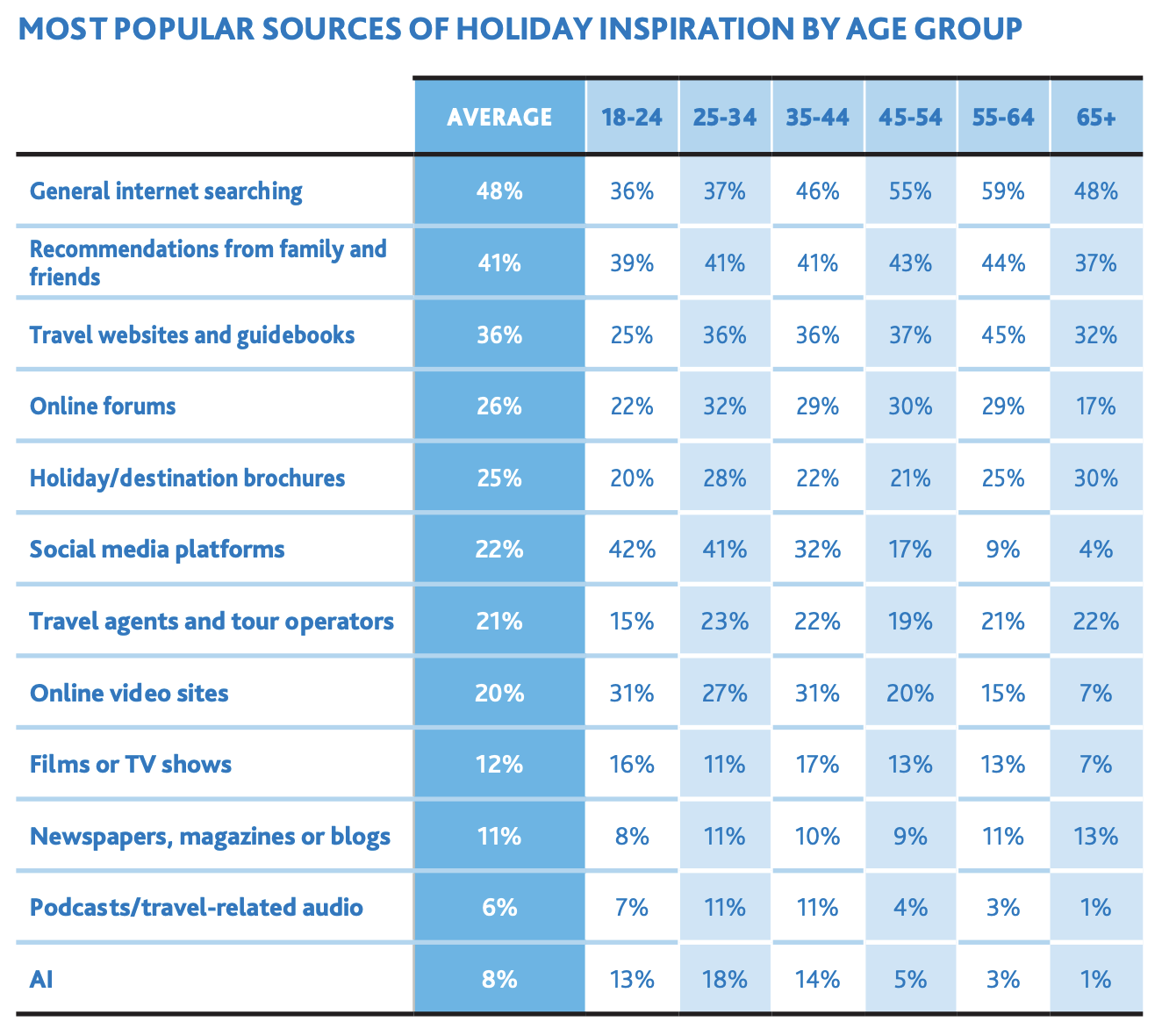
The starkest generational divide is social media, used by 42% of 18 to 24s for holiday inspiration but only 4% of over-65s. The 18 to 44 age bracket is also far more likely to use AI to search for holiday ideas than those in the 45 to 65+ range.
Online video sites also play a bigger part among younger travellers, used by 31% of 18 to 24-year-olds and 27% of 25 to 34-year-olds. Despite the hyped up headlines, AI is still low overall at 8%, but rises to 13% among 18 to 24-year-olds and 18% among 25 to 34-year-olds. For older audiences, the pattern looks very different, with general internet searching, travel websites, brochures, family and friends continuing to carry more weight.
What’s clear is that different age groups are now finding holiday ideas in very different places. Google still plays a major role, but so too do social platforms, video, review sites, brochures, word of mouth and, to a certain extent, AI.
But AI’s role in travel planning is certainly growing. A recent study by MMGY Travel Intelligence found that 52% of British travellers now use AI tools to support travel planning, up from 40% a year ago, with ChatGPT the most widely used AI platform.
The same MMGY research found that 46% of UK travellers say social media influences their holiday decisions and 32% use social platforms to research and follow destinations.
Elsewhere, Skyscanner’s 2026 Gen Z research adds another useful angle, finding TikTok is the most popular source of travel inspiration for Gen Z in the UK at 59%, followed by Instagram at 51%. Film and TV still matter too, at 26%, while podcasts sit at 11%.
Put those sources together and you get a messier, more holistic view of discovery. People are using search engines, social feeds, video platforms, AI tools, reviews, forums, friends, family and culture. Attribution models (and finance directors who like clean ROI calculations) won’t like it, but this is just how we roll in 2026.
Travel booking moments
Holiday searches rarely begin as definite purchasing decisions. Long before someone searches ‘best luxury holidays to Greece’ or clicks on a paid ad, they’ve probably already gathered ideas, ruled destinations in or out, asked for opinions and looked for reassurance elsewhere (only 41% of travellers have a destination in mind when booking their trip according to Expedia).
That’s why travel brands need to think beyond the final Google search. The booking journey is made up of smaller search moments, and many of them happen before a traveller has the language, confidence or intent to make an enquiry.
There’s the dreaming stage, when someone simply thinks, I want to get away. That idea might come from a TikTok, a TV series, a friend’s trip, a Reddit thread or an AI-generated shortlist. Then comes the planning stage, when the practical questions start: how do we get there, where should we stay, what’s nearby and what will this actually cost? After that comes the booking moment, followed by the experience itself.
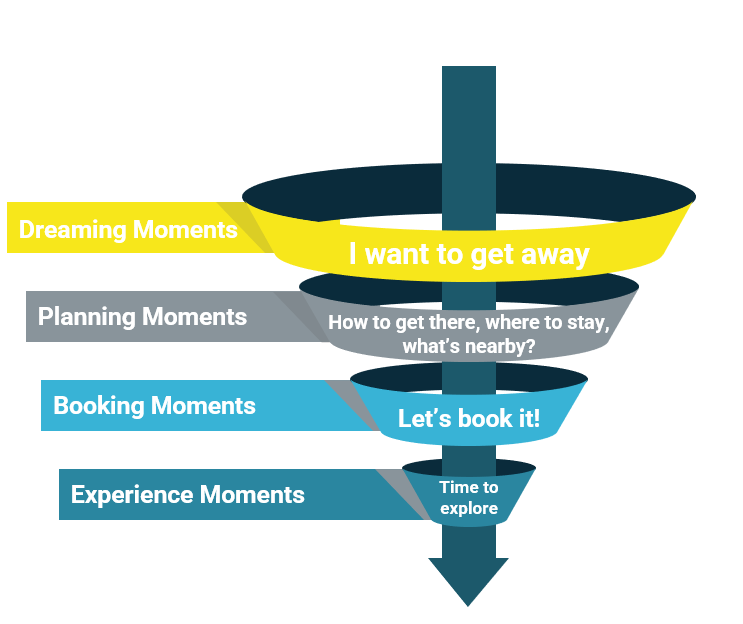
That might sound linear on a diagram, but in real life there’s a lot more back and forth. People loop between these stages constantly. These moments all feed into the final enquiry, even when analytics gives the credit to brand search, paid search or direct traffic.
This is the point travel brands can’t afford to miss. If we judge every channel only by the last click, we risk underinvesting in the places where the idea started, the doubts that were answered and the traveller began to trust the destination. That’s the real reason search needs to be understood more broadly. Google may still capture the final demand, but it doesn’t always create it.
The problem for smaller travel brands
For all the talk about omnichannel behaviour, most travel companies still have to work within very constrained limits. Time, budget, content assets, team capacity and the small matter of actually running the business.
Large travel businesses with inhouse marketing teams can run creator campaigns, invest in video, test TikTok, produce destination guides, chase digital PR, improve SEO, pay for media, build newsletters and spend hours responding to each and every review on a multitude of platforms.
Most operators aren’t working with that kind of resource. For them, being told to ‘show up everywhere’ is useless advice. The better question is how a travel brand can appear in more of the places people are searching without creating a content machine nobody has time to run.
Focus on the questions worth owning
Before choosing platforms, look at the questions your customers ask before they feel ready to enquire.
When’s the best time to go? How long do I need? Is this destination right for families? What’s worth paying more for? Which route makes most sense? What should I book in advance? What do people usually get wrong? What will the weather actually be like?
These questions are often more useful than a list of broad keywords because they show what people actually need to understand before they feel comfortable speaking to a travel brand.
They also work across platforms. The same answer can become Google content, TikTok captions, YouTube titles, email sections, Instagram carousels, FAQ blocks, sales team snippets and AI-friendly explanations.
A smaller team doesn’t need a separate strategy for every channel. It needs a stronger bank of answers to the questions that matter commercially.
Build one useful answer, then make it work harder
Take a travel operator that knows customers often ask whether they should cruise or stay on land in the Galápagos. That’s a strong topic because it has search demand, sales value, planning complexity and genuine nuance.
The first job is to create one proper answer. Who does each option suit? What are the trade-offs? What costs more? What do people regret? What would a specialist recommend? What should someone ask before booking?
Once that exists, it can travel. The article can become a short video, the comparison table can become an Instagram carousel, the consultant quote can become a LinkedIn post, the FAQs can sit on the page and the main takeaways can become a sales email.
That’s how smaller teams cover more search behaviour without starting from scratch every week. Make the expertise you already have easier to find, reuse and trust.
What should a smaller operator do first?
For a travel brand with limited resource, I’d start with a 90-day plan built around sales insight, commercially useful topics and a small number of priority channels.
First, speak to the sales team. Ask them which questions they answer every week, which questions signal someone is close to enquiring, which objections slow people down and which destinations need the most explanation. If possible, some extra investment in AI call technology like SystemX can also generate huge amounts of insights from call centre conversations.
Then choose five commercially useful topics where customer need and business value overlap. A topic like best beaches in Greece might bring traffic, but which Greek island is right for a luxury family holiday? may be far more useful for the right operator.
Next, create one strong answer for each topic. Make each one specific, honest and rooted in expertise. Include first-hand advice, seasonal context, common mistakes, who the trip suits and what the customer should do next.
Then repurpose each answer across two or three priority places. Don’t pick platforms because they’re fashionable. Pick them because they match how your audience researches. For some brands, that might mean Google, YouTube and email. For others, it might mean Instagram, paid social and stronger website guides.
The goal is focus. For niche or high-consideration trips, community listening, Reddit-style questions and AI-friendly FAQ content might be more useful than another polished Reel.
What does this mean for SEO?
SEO still matters. A lot.
Travel brands still need to be visible on the SERPs when people are actively comparing destinations, looking for advice or checking operators. Technical SEO, content structure, internal linking, site speed, authority and conversion all still count.
But SEO has to sit closer to the rest of the marketing mix.
Search data tells us what people ask when they know how to describe the thing they want. Social search, creator content, community threads, AI prompts and sales conversations help us understand the questions forming before that point.
That should influence what travel brands write, film, publish and promote. It should also influence how they measure success.
If social creates the idea, SEO answers the practical questions and brand search gets the final visit, the last-click report won’t show the full picture. Travel marketers need to look for wider signs of demand, including branded search growth, assisted conversions, saved content, returning users, direct traffic, enquiry quality and the questions customers ask when they arrive.
None of that is as neat as a ranking report, but that doesn’t make it any less valuable.
Be in the right place at the right time
Travel inspiration has spread its wings. People are still searching, but they’re doing it across more platforms, in more formats and at more stages of the decision-making process. There’s a golden opportunity here for travel brands to understand where customers get ideas, where they go for reassurance and what they need to know before they feel ready to enquire.
Smaller teams can hold their own against the bigger brands by choosing the questions they want to own, creating genuinely useful answers and reworking that expertise across the places their audience already uses.
That’s the sensible version of search everywhere. No panic and no pretending every business needs to become a TikTok whizz overnight.
Just better answers, in more useful places, at the moments when travellers are still deciding what kind of trip they want and who they trust to help them book it.


