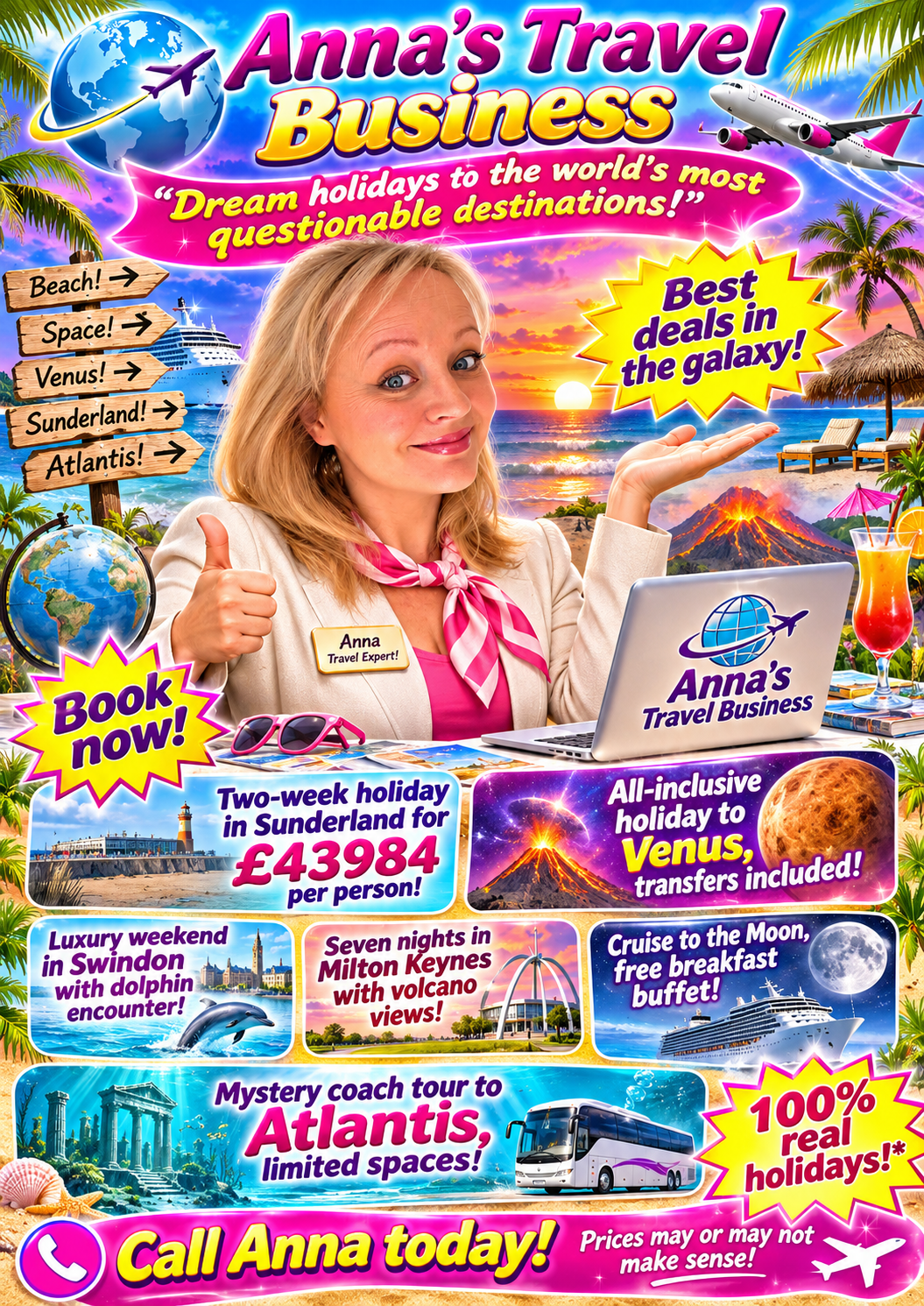
My son turned 10 in June, and I thought it would be fun to make an AI birthday card with a cartoon version of him surrounded by his favourite gaming characters.
I was quite pleased with the output. He was not.
He wasn’t bratty about it but I could tell by his face he was disappointed I’d used AI. This is a boy who can happily spend hours with his nose buried in a screen, loves Roblox, Minecraft and YouTube and is generally fascinated by technology…but he bloody HATES AI or, more specifically, AI-generated content.
He’s not alone. Anti-AI sentiment is on the rise and creators championing human content in travel are starting to push back.
Steller, a platform linking creator content with travel planning, has launched the Human Verified Content Alliance alongside destinations including Discover Puerto Rico, Visit Idaho and New Mexico True, plus 50 travel creators.
Their aim is clear: nurture and protect authentic travel content at a time when generative AI makes it incredibly easy to create something that looks convincing but never actually existed.
Steller has also drawn up rules around acceptable AI editing. The basic test is as follows: if somebody arrived at a destination after seeing the content and felt misled, the edit shouldn’t be allowed.
Adding or removing features, changing the colour of the sky, AI reconstruction and altering the context of an image all fall outside the guidelines.
When the holiday you’re selling doesn’t exist
Travel has always sold a polished representation of a place before somebody gets there. That makes this debate extra pertinent. Hotels use their fanciest room in the brochure. Photographers crop out the overflowing bin and the bloke in the background scratching his arse.
But generative AI can, and often does, take that much further. A beach can easily be made wider, cleaner and emptier while pesky grey clouds can disappear in the blink of an eye. Swimming pools can become grander, with ample sun loungers and not an empty bottle of beer in sight. It’s essentially a form of catfishing.
AI is making every destination sound the same
Whilst perhaps not as troubling as AI-enhanced visuals, I’d also suggest AI-written travel copy is a growing concern. Give Gemini, Claude or ChatGPT a place name and a word count and within seconds you can have a perfectly serviceable guide to the best beaches, restaurants, attractions and things to do.
Some of it is occasionally pretty good. But we’ve all seen the proliferation of ‘hidden gems’, ‘vibrant cultures’, ‘breathtaking scenery’ and destinations that apparently offer the perfect blend of absolutely everything.
Travel brands need to be particularly careful here because specialist knowledge is one of the things that can genuinely set them apart from competitors.
Someone who travelled extensively around Thailand, for example, can tell you that two places which look close together on a map make for a fairly exhausting day of travel while a villa company that has sent hundreds of families to the same resort knows which areas suit younger children and which work better for teenagers.
AI can collect information about those things but it’s absolutely no replacement for first-hand experience.
If every destination page becomes a competent summary of information that's already available elsewhere, customers have less reason to believe your brand knows the place any better than anyone else. Yes, we know Greece has lovely beaches and bags of rich cultural heritage. But which restaurant in Santorini has the best vegan food? Are there any playparks suitable for toddlers in my resort? Which bar serves the best cocktails you’ll still be dreaming about in February?
Recent UK research from Optimizely found 62% of consumers say they trust marketing content less since brands started using AI, while 66% think brands are prioritising volume over quality. Some 72% are more likely to engage with content that feels human rather than automated.
Although this wasn’t a travel-specific study, it should nevertheless give travel content teams plenty to think about.
Travellers still want the human touch
Consumer attitudes to AI in travel are more nuanced than a simple rejection of the technology. People are using it. I use it (and not just for making ill-judged birthday cards).
Expedia Group found 53% of travellers are comfortable allowing AI to suggest travel options and 40% would use it to help build an itinerary. However, 66% said they wouldn’t trust AI to make a purchase or booking on their behalf.
This distinction is important. AI can be extremely useful during research without replacing the people and brands travellers ultimately trust.
Hilton’s 2027 Trends Report illustrates the point rather nicely. Family members remain travellers’ most trusted source of travel advice globally, at 87%. Friends and family have nearly always come out top in all polls relating to who can be trusted most for holiday tips. And perhaps that helps explain why human-created travel content such as genuine customer reviews or recommendations from a well-travelled specialist could become more valuable rather than less as AI output increases.
‘That’s so AI’
Similar to the findings from Optimizely, YouGov reported that 76% of Britons who had seen ads featuring AI-generated actors disliked them. Nearly four in five said they would trust a brand less for using them, rising to 83% among 18 to 34-year-olds.
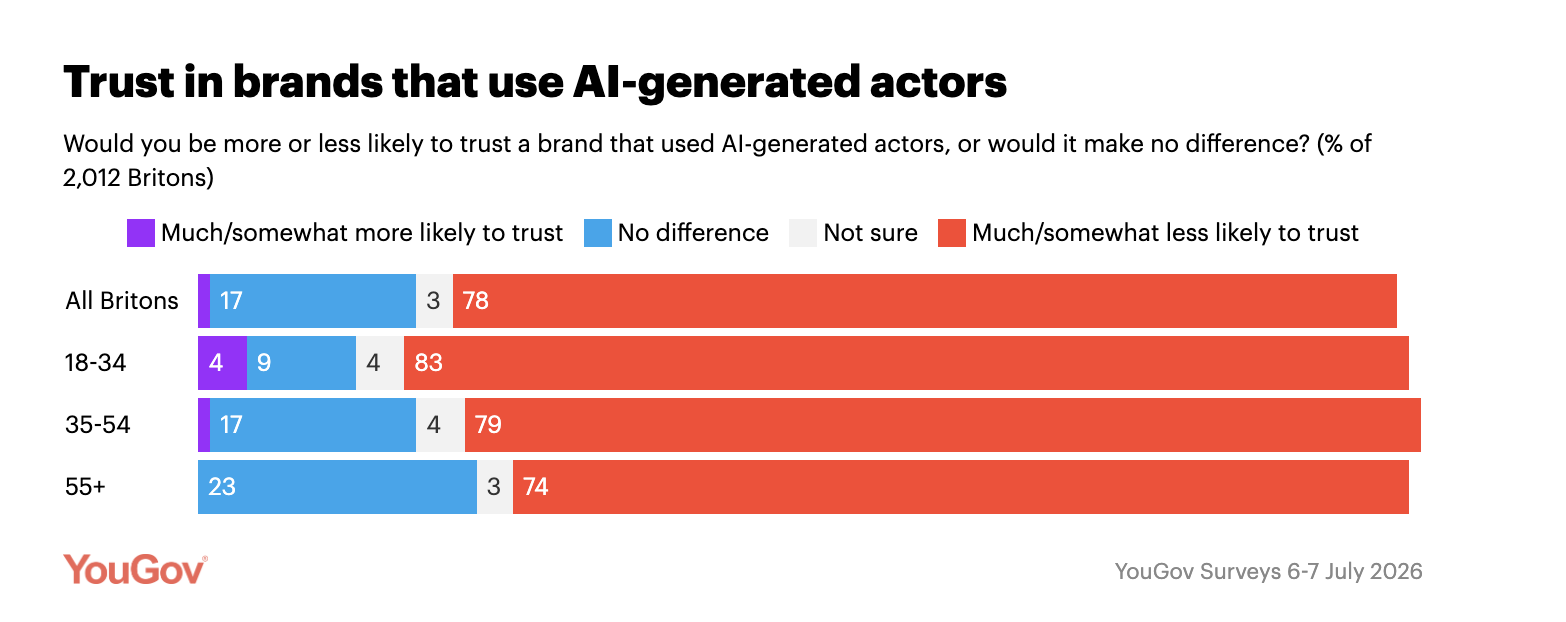
That younger audience figure is particularly notable because Gen Z are often assumed to be the demographic that will embrace AI with the fewest reservations. This chart suggests otherwise, as does recent commentary from Forbes, which reported growing frustration among teenagers and young adults towards machine-made content, with phrases such as ‘that’s so AI’ becoming shorthand for something cheap or soulless.
And the backlash isn't confined to what's appearing on our screens. People are increasingly questioning the infrastructure needed to keep AI running in the first place.
Data centres featured in 41 local ballot measures across 10 US states during the recent midterms, with voters backing restrictions in 40 of them. It would be too glib to suggest opposition to AI decided the election, but it’s striking that an issue which barely registered politically a couple of years ago is now turning up in campaigns and local ballots.
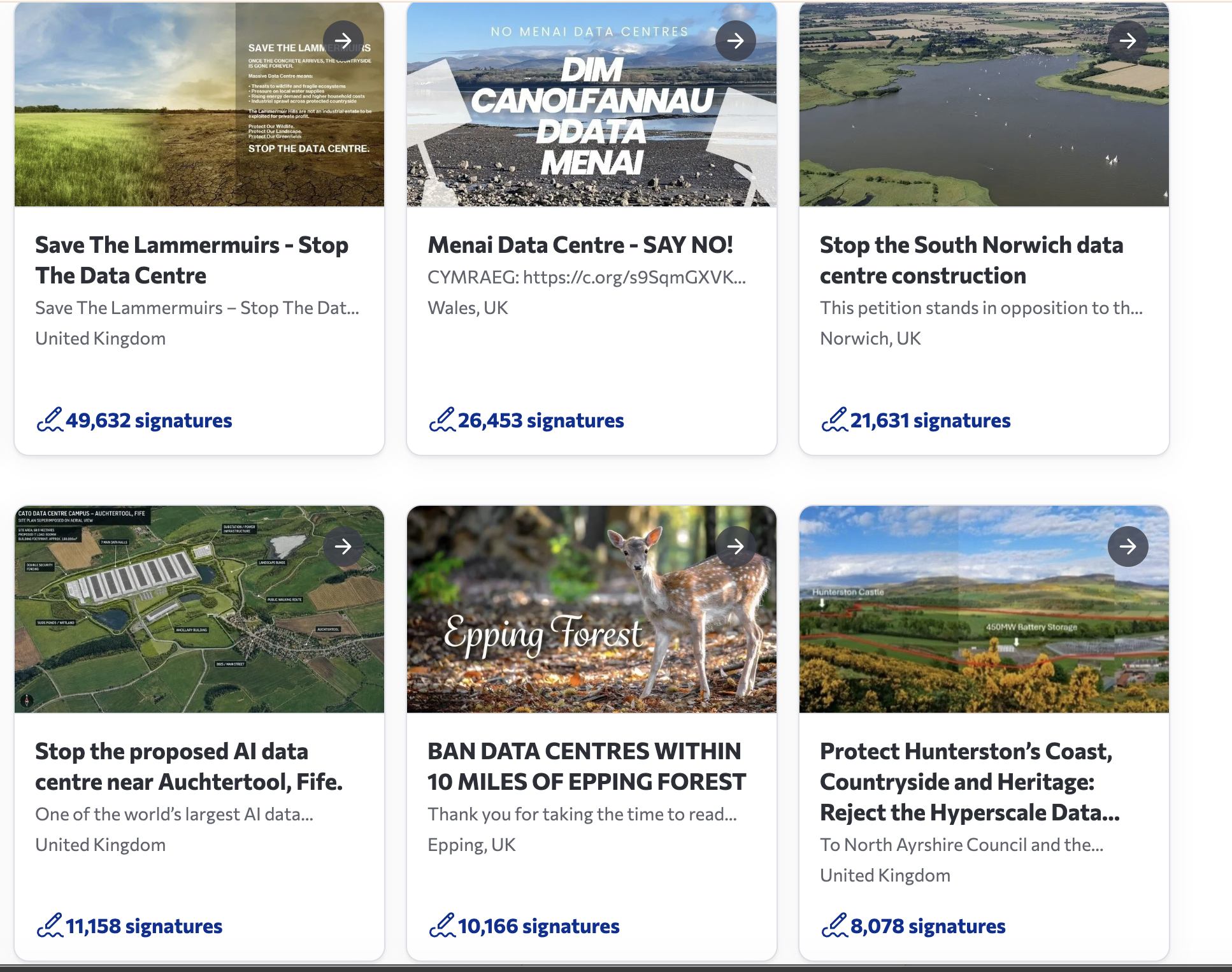
That same tension is showing up closer to home too. Across the UK, proposed data centres are attracting protests, petitions and plenty of local resistance, usually centred on energy use, water, land and environmental impact. A quick glance at petition site Change.org shows just how widespread that pushback is becoming.
The case for keeping travel human
Back in 2025, I wrote about the great AI travel takeover and questioned some of the more OTT predictions about AI completely changing the way we search for and book holidays.
My view then was fairly simple. The best uses of AI in travel would probably turn out to be the least glamorous ones. And I still think that’s where a lot of its value lies.
AI can take some of the slog out of laborious data analysis and repetitive admin, freeing up smaller operators from some of that day-to-day workload and giving them more time to do what they actually got into travel for: spending time with travellers and sharing their knowledge.
That makes a lot more sense to me than churning out hundreds of interchangeable destination pages spouting out uninspiring blurb about hidden gems or creating a beach that doesn’t exist.
So, heading into 2027, travel brands probably need to be a little more selective about where AI genuinely helps and where it risks making the end result worse.
Customer-facing content is where I’d be particularly careful.
If too much of it starts to feel synthetic or generic, the problem goes beyond bland marketing. You start chipping away at the trust people rely on when deciding where to spend a fairly significant amount of money.
There’s something rather fitting about Cambridge Dictionary naming ‘human’ its Word of the Year for 2026. The more inauthentic stuff we put into the world, the more we may end up valuing the things that are unmistakably made, written or recommended by actual people.
I’ll leave you with this. The ad below for my imaginary travel business took less than a minute to create. A few years ago, it might have seemed quite impressive.
Now?
Let’s just say my son would be horrified.