This is a question I’ve heard bandied about online and at various industry events, but I’ve always dismissed such a notion as somewhat clickbaity. Of course, travel brand USPs aren’t dead. I can name dozens of travel brands selling something completely unique with a tone of voice that isn’t replicated by any other company anywhere in the world.
Erm…hang on. No…I’m not sure it’s that easy.
Spend a few minutes browsing travel websites and you’d be forgiven for sensing a copy-and-paste feel. You sell luxury tailormade Mediterranean holidays with a personal touch? So do 4645 others. You sell unforgettable safaris? Yep, there are 3923 others doing that too.
So many brands claim to offer ‘the personal touch’ delivered by ‘passionate experts’ who care deeply about every detail of your journey. Style blurs into style, tone echoes tone and before long the same familiar language repeats itself. Words like ‘breath-taking’, ‘pristine beaches’ and ‘hidden gems’ do the rounds with alarming frequency, many of which are about as hidden as Piccadilly Circus.
Most companies genuinely do care about their clients, and it would be disingenuous to suggest otherwise. They curate bespoke itineraries and provide great service from first enquiry through to aftercare. None of that is trivial and for travellers spending serious money, it absolutely matters. The problem is that none of it can really be classed as a USP. It’s a bit like a restaurant proudly reassuring diners that their food will arrive warm and served on a plate.
Ask someone on the street to name a travel brand with a truly distinct USP and you’d likely be met with a blank look. Ryanair, perhaps. Saga, maybe. But beyond a small handful, most brands blur together in the public imagination, known more for where they sell than for what makes them meaningfully different.
It’s also important to separate ‘niche’ from ‘USP’. A niche defines the audience or type of trip. A USP explains why your brand, specifically, is worth choosing within that space.
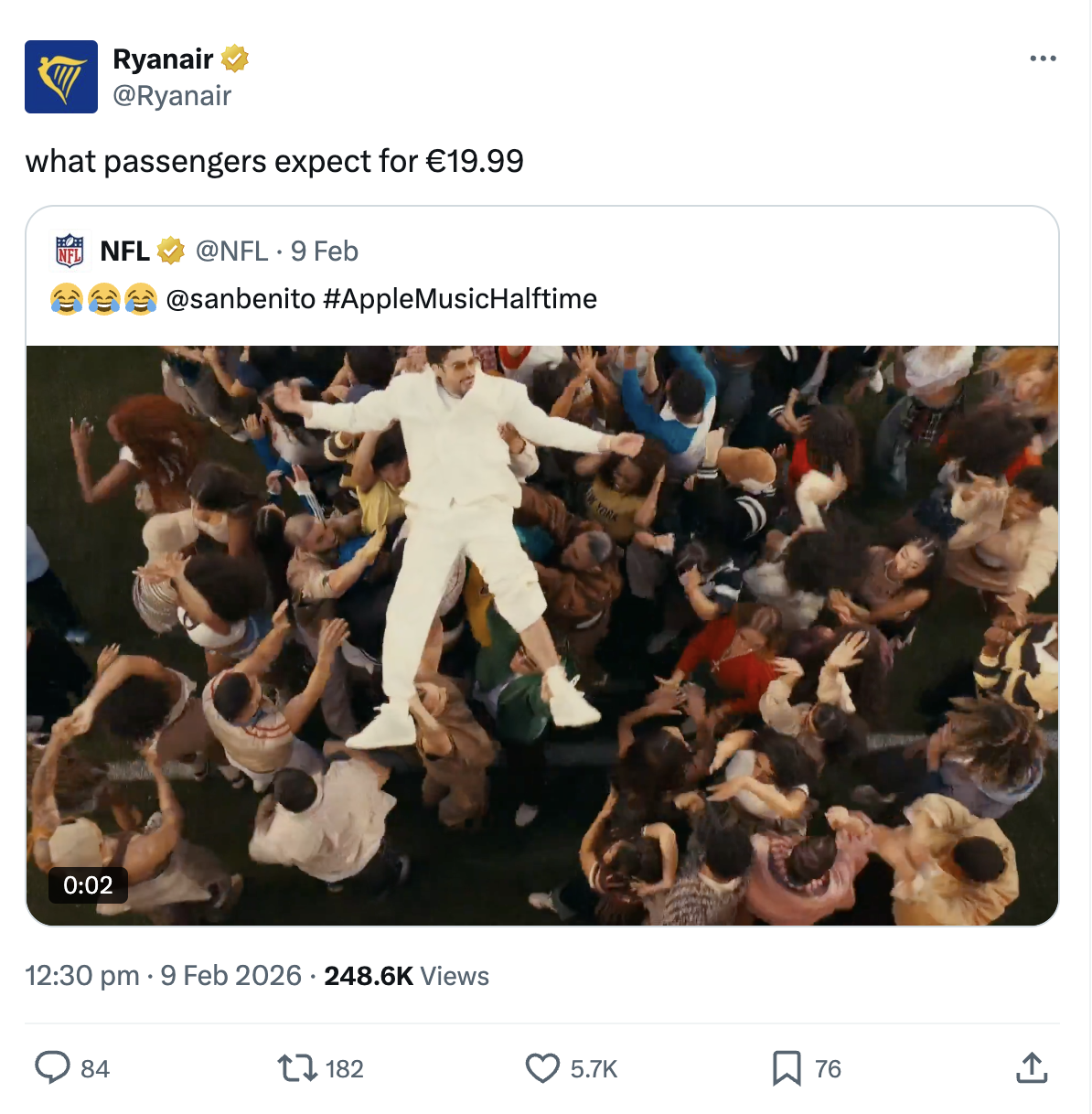
Ryanair is a useful example. The airline has firmly ringfenced a corner of the market with its blunt ‘everyone loves to hate us’ schtick, backed by unapologetic clarity on price and expectation. You may not enjoy a Ryanair flight, but you understand it instantly.
And that is its USP.
Most travel is structurally similar
Strip away branding, photography styles and flowery marketing copy, and you’ll find that most travel companies operate on remarkably similar foundations, formed less by imagination and more by the economics of a complex and crowded industry. More often than not, this means:
- Similar suppliers
- Similar destinations
- Similar price bands
- Similar customer promises
- Similar visual language
There’s a lot of side-eyeing in this industry. For example, when one brand leans into selling villa holidays, ten more follow within the year. This isn’t laziness so much as risk management. Travel is high value, operationally delicate and emotionally significant for customers who are spending mega bucks on precious time off. Radical difference can feel irresponsible when certainty is what people believe they are buying, meaning genuine individuality rarely comes from the itinerary alone, however cleverly or eloquently written.
AI should be approached with caution
Even the best copywriter in the world can’t guarantee your brand a USP that sticks. Good, original copy DOES stand out though – now so more than ever. You don’t need to be Shakespeare - travellers don’t care about pompous adjectives or hyperboles - but you do need to be authentic. And by authentic, I mean avoiding outsourcing your marketing content to AI.
Don’t get me wrong, the likes of ChatGPT and co can be a godsend for producing content quickly. But without meticulous, strategic prompts and a healthy amount of editing, outputs can be painfully ‘samey’. Hundreds of brands are publishing perfectly competent, pleasantly readable and entirely interchangeable AI-written copy. It’s fine, but unlikely to stick in the minds of their audience.
Once you spot AI-produced travel content, the signs become easy to recognise:
- Identical paragraph rhythms
- Destination descriptions that could apply to almost anywhere sunny
- Overused terms like ‘breath-taking views’ and ‘hidden gems’
- A neutral tone designed to reassure rather than spark curiosity
Which leads to a slightly brutal but useful observation: if your brand tone of voice can be easily recreated by AI, it was never really yours in the first place. And don’t get me started on AI imagery.
That’s not to say you *can’t* get generative AI to emulate your brand style to some degree…but it’s not easy (nor should it be).
Using AI without compromising your tone of voice
AI is certainly not the kiss of death for travel brands (on the contrary, many consider it the future) but adopting it in a way that complements your brand rather than damage it takes a whole lot of time and careful refinement.
To give you an example, I was recently tasked by one of our travel clients to create a prompt for producing destination landing pages.
After hours of trial and error, the end result stretched to four pages – just for one prompt.
But it’s this level of painstaking specificity that’s needed to get generative AI to write like you. Even then, the output should never be the done-and-dusted final copy. Keep humans firmly responsible for the final published copy.
How can a travel brand rise up amidst the noise?
We don’t live in a ‘you get what you’re given’ culture anymore. The rise of user-generated reviews across platforms such as Google, Tripadvisor and Instagram means brands can no longer get away with the bare minimum. It’s also not enough to say, ‘they’re all doing it so we should too’.
If you’re ready to take a leap of faith, here are three key areas that can help set you apart:
1. Boldness over blandness
There’s a heck of a lot of travel copy out there that’s decidedly neutral, written to offend no one and therefore excite almost no one either. The brands that linger in the mind tend to sound like people with opinions. They might recommend fewer places with greater confidence or offer an unabashed view on why certain destinations are overrated at particular times of year. They curate decisively instead of cataloguing endlessly.
We’ve talked about Ryanair and their acerbic approach but let’s look at another brand who went for bold over bland.
Those of us of a certain age will remember the controversial 90’s Saatchi & Saatchi ads for Club 18-30 which courted controversy to the point of being eventually banned by the ASA. Some of these ads were a tad risqué, others were downright obscene. One thing is certain though – it got us talking and helped Club 18-30 develop a USP that was as distinct as they come.

2. Be even more personal
How can a brand offer an even more personal touch? Physically carry clients onto the plane and stand outside the hotel shouting, ‘are you having a nice time?!’.
I mean, you could do that.
But an alternative option is to have one travel agent, perhaps local to you, who takes care of everything from beginning to end. One person you can trust to find you a hotel for the night if your flight is cancelled or recommend a cute little bakery in Lisbon because they went there themselves a few years back.
Travel Counsellors has taken this concept and run with it. The client not only gets to pick the brand, but also the individual Travel Counsellor. My TC is one of my best mates from school. Others have TCs as their neighbours, friends, acquaintances, gym buddies, etc. As a result, there’s an emotional investment and connection on both sides.
And for those who believe this type of one-to-one service is dying out in the age of AI should perhaps take note that Travel Counsellors experienced a record year in 2025, with a 7% year-on-year growth in the number of bookings.
3. Own your niche
There is a whole heap of niche travel brands out there, selling a range of weird and wonderful holidays. The problem is, there will always be a brand offering something similar to you. It may not be exactly the same, but unless you go super niche, competition will always exist.
Ownership comes when a business commits so fully to a space that it becomes difficult to imagine anyone else doing it in quite the same way. This could come in the form of relationships built over decades with a handful of boutique hotels. It might be an encyclopaedic knowledge of a single, specific area. Or it could even be a refusal to sell anything outside that specialism, however tempting the commercial opportunity. Saying ‘no’ is often the clearest signal that a niche is genuine rather than decorative.
There is also a confidence that comes with true specialism. Brands that properly own their corner of the market rarely feel the need to shout about being bespoke, personal or unforgettable. Their authority is implied through detail, precision and consistency. They answer questions before customers think to ask them. In short, they behave less like retailers and more like trusted insiders who know exactly what you want.
Perhaps the better question is not about USPs at all
Instead of wondering what makes a travel brand unique, a more revealing question might be:
What would feel noticeably absent to travellers if your brand disappeared tomorrow?
If the honest answer is ‘not much, they’d probably just book somewhere else’, then you don’t have a USP, but rather a service that is competently delivered in a crowded market. Hardly a disaster, but not a position that will be remembered to any great extent either.
And if that is the case, then business and marketing teams need to think bigger and work harder to offer travel products and experiences that are genuinely different. There’s a real lack of market positioning across the travel industry which results in many people selling many similar things. Taking the time to go further up the supply chain and be more strategic to find one-of-a-kind or hard-to-replicate products does make the marketing job that much easier.
USPs aren't dead, but they are far rarer than most travel brands would like to admit. And until more companies are willing to put their name to something sharper than ‘personal service’, the pleasant but ultimately forgettable sameness won’t disappear any time soon.
If you would like to talk to us about your wider marketing strategy for your travel brand, then why not get in touch? We’d love to have a chat!


