Welcome to our roundup of the latest SEO news! These are the stories that have caught our eye over the past month.
1. Google makes AI search links more prominent
Google has announced several changes to AI Overviews and AI Mode in an effort to make it easier for users to click through to websites. These include placing links higher up within AI-generated answers, testing dedicated sections for official websites and making related article links more prominent with images. All sounds good, but whether these changes will actually result in more clicks remains to be seen…
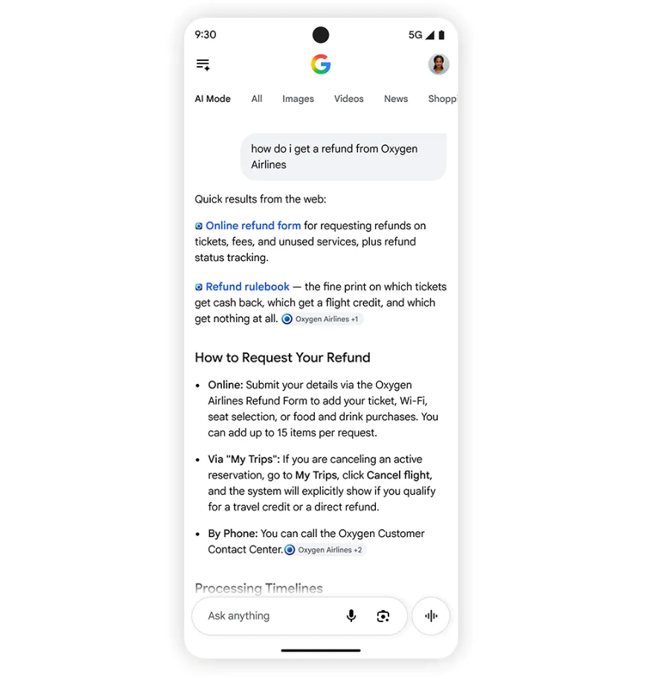
The problem is that AI search hasn’t exactly been brilliant for website traffic so far. Research published by Ahrefs earlier this year found that AI Overviews were associated with a 58% reduction in clickthrough rates for the top organic result. Meanwhile, Marie Haynes analysed more than 145 million website sessions across 100 websites and found that ChatGPT delivered just 0.62% as much traffic as Google organic search. Even when other AI tools were included, this only increased to 0.73%.
Of course, ChatGPT referrals and clicks from Google’s AI Overviews aren’t quite the same thing, but the figures do highlight how little traffic AI search is currently sending our way. Google clearly wants to make the sources behind its AI answers easier to explore, but if users are already getting everything they need from the summary, will they bother clicking through? We’ll have to see whether these changes actually make a difference.
2. Are Google’s search results being ‘poisoned’?
If you’ve noticed some strange keyword ranking fluctuations recently, this might help explain why. New research from Nozzle suggests Google has been serving altered search results to automated rank tracking tools, making websites appear to have suddenly lost their rankings when that might not actually be the case.
These so-called ‘poisoned SERPs’ look like normal search results but contain completely different websites from those that would usually rank for the keyword. Nozzle analysed 42.5 million SERPs collected since mid-September and found that the proportion of first-page results classified as poisoned reached 34.8% on 27 October. The travel industry hasn’t escaped either, with 19.4% of the US travel and hospitality SERPs studied being affected, rising to 44.6% on the worst day.
It’s not entirely clear why Google is doing this (if they actually are). One reason could be that it’s part of Google’s efforts to tackle automated scraping. Regardless, whatever is going on is making life more difficult for SEOs trying to work out what’s actually happening in the search results. A keyword might suddenly disappear from a ranking report, only to reappear a few days later. It’s another reminder that rank tracking doesn’t always tell the full story and that sudden drops should be checked against Search Console and organic traffic data before jumping to conclusions.
3. Discord is opening up to Google, while Reddit could be closing its doors
Discord has announced plans to make public community discussions easier to discover through search engines. Until now, much of the information shared within Discord has been hidden from Google, but all that’s about to change. From 16 November, Discord’s 63,000+ Discoverable Servers will have public web pages that can include summaries of community discussions. Individual messages from public channels could also start appearing in search results from mid-December, although users and server admins will have control over what gets shared.

Coincidentally, this comes just as Reddit is moving in the opposite direction, with plans to test a more logged-in experience in selected markets outside the US. Reddit has also reported losing more than one million weekly search referrals on average during October, with its CEO pointing fingers towards Google’s AI features as a possible contributor. We don’t know whether bots will still be able to crawl Reddit’s content for the SERPs, but accessing content through search links is still expected to remain accessible.
4. Booking.com reveals its travel predictions for 2027
Booking.com has released its annual travel predictions, revealing some interesting changes in how people might choose their holidays in 2027. Based on research involving more than 28,000 travellers across 32 countries and territories, the findings suggest that people are becoming more interested in personalised experiences and unusual trips.
In fact, 81% of respondents said they would choose a holiday destination based on how they want to feel. The vibes seem to matter more than the place itself. For holiday packages, 66% of people would prefer it if they could remove services that they don’t expect to use. If an all-inclusive has a dinner buffet but you’d rather go out to eat every night – why pay for it? Travellers are wanting to cherry pick the parts they like and toss away the bits they might not use within a package.
Rather than always searching for a specific destination, travellers may increasingly look for experiences that match their interests, such as relaxing holidays, unique adventures or places to escape the crowds. Of course, these are predictions based on what people say they want, rather than actual search data but they’re still worth keeping in mind when planning content or looking for new opportunities to reach customers earlier in their research journey.
That’s all for now – see you next month!


