Welcome to our roundup of the latest SEO news! These are the stories that have caught our eye over the past month.
1. Google’s February 2026 Discover core update
Last month, Google released their February 2026 Discover core update. A strange one because all updates prior to this affected both Search and Discover, so this is Google’s first Discover-only update and initially targets English-language results in the US before expanding to other regions.
While pages and blogs appearing in Google Discover are shown algorithmically rather than through search queries, it’s still important for visibility and the type of articles that appears here are still pieces of content that very much align with SEO best practices.
The aim of this update was to improve user experience in a few ways:
- Showing users more locally relevant content from websites in their country.
- Reducing sensational content and clickbait.
- Showing more original content from websites with expertise in a given area.
So how can you get your content to show up on the Discover feed? As usual, continue to focus on creating high-quality content that displays E-E-A-T (Experience, Expertise, Authoritativeness, Trustworthiness) signals.
2. Google vs TikTok as a search engine
Adobe recently published research looking into how consumers are using TikTok as a search engine with nearly 49% of users having done so at least once. And it’ll be no surprise that 65% of these users are Gen Z, searching topics such as new recipes, DIY tips, beauty advice or workout routines.
TikTok is also great for wanderlust with short videos showcasing destinations, travel tips and influencers living their best holiday life. Talker Research found that 52% of American Gen Zs use TikTok for travel inspiration!
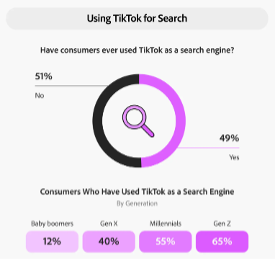
Source: Adobe
While these numbers seem quite large, I wouldn’t worry too much about TikTok taking over the world (of search). Adobe reported that 85% of consumers still found Google the most helpful when searching for information with Gen Z preference for TikTok over Google actually declining year on year from 8% in 2024 to 4% in 2026.
Throw a bunch of other social medias and search engines into the mix and we’ve got ourselves a hybrid search environment where visibility across multiple platforms is actually quite important. Optimising content for Google and TikTok will offer the best visibility for brands, especially if you’re targeting a younger audience.
3. AI bots are increasing their reach across the web
Love them or hate them, AI bots are rapidly expanding across the web. Traditionally, websites were primarily crawled by search engine bots (Googlebot or Bingbot), but the rise of generative AI systems has introduced a new class of bots that gather information used in AI answers, training datasets and conversational search tools.
Hostinger found that openai-gptbot (ChatGPT’s bot) now has 55.67% average coverage of the web compared to google-bot’s 72%. It’s not that far off! That’s a lot of coverage for the LLM with the most active users. While website owners can safely block any AI bots scraping their content as training data, it’s a good idea to allow assistant bots to crawl your website because that’s how you get those juicy AI citations.
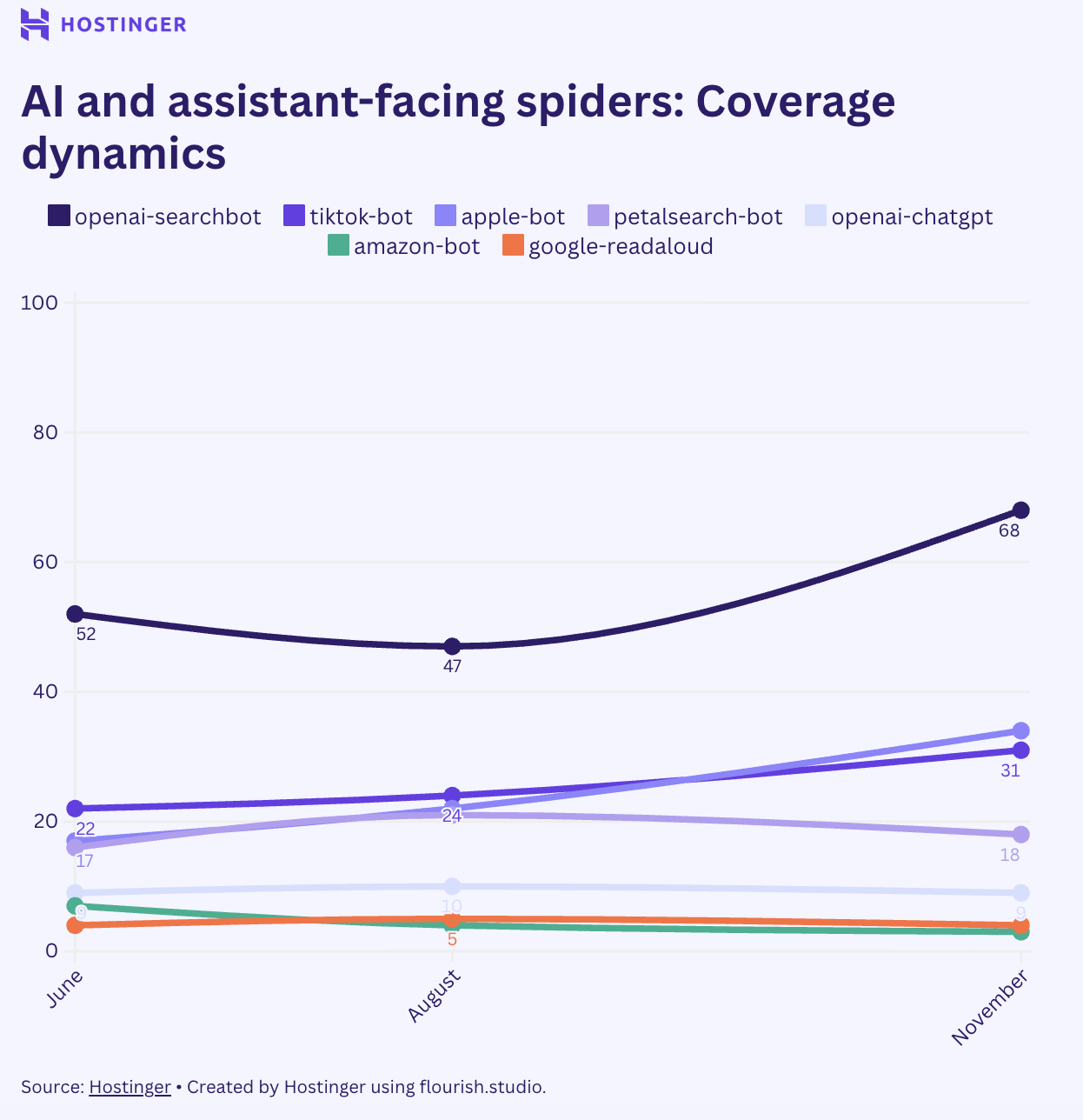
Appearing in AI search results, whether that’s ChatGPT, Claude, AI Overviews, is arguably becoming as important as traditional search rankings. Focusing on Generative Engine Optimisation, ensuring content is structured optimally and positioning your site as an authoritative source of information can increase your chances of showing up in these results.
4. Travel planning is AI-assisted but still search-driven
Despite AI hype, research from Future Partners shows that 62% of travellers still rely on traditional search engines when planning trips, with around 50% using online travel agencies and social media. In comparison, only 40% report using AI tools are part of their travel planning, suggesting websites discovered through traditional search still play a vital role in this case.
It seems that AI and search engines go hand in hand when it comes to planning holidays, booking travel and creating itineraries, with travellers likely using AI to bring ideas to the table before turning to search engines to validate information and complete bookings. For travel brands, this highlights the importance of maintaining strong visibility in both traditional search results and emerging AI-powered discovery platforms.
That's all for now - see you next month!


