Welcome to our roundup of the latest SEO news! These are the stories that have caught our eye over the past month.
1. Google December 2025 core update rollout is now complete
Google completed the rollout of its December 2025 Core Update on 11th December, marking the final major algorithm update of the year. For travel brands, this update acted as a broad reassessment of which destination guides, itineraries and reviews best support travellers during the planning process.
This was Google’s third core update in 2025, following the March and June rollouts. While the update concluded before year-end, ranking fluctuations likely settled as travellers entered the important January inspiration and booking phase.
The update reinforced several priorities for travel websites:
First-hand experience continues to be a strong ranking signal, favouring content created by people with real destination knowledge.
Quality over quantity matters more than ever, with thin or generic list-style content underperforming more in competitive travel searches.
Continuous improvement pays off, as Google confirmed that smaller core updates happen regularly, not just during major rollouts.
If your site saw ranking or traffic changes in December, it doesn’t necessarily indicate a problem. In many cases, it reflects Google reassessing which content best matches traveller intent.
For 2026, travel brands should double down on experience-led, authoritative content and ongoing optimisation to remain competitive in organic search.
2. ChatGPT Introduces Local Knowledge Panels
ChatGPT has begun showing local knowledge panel-style results for location-based searches, following the release of OpenAI’s GPT-5.2 model in December. While not formally announced as a local search update, these results were first identified by Local SEO expert Greg Sterling.
For travel brands, hotels, attractions and tour operators, this is an early signal that AI-driven discovery is becoming more visual and location-aware. Local search results in ChatGPT now include maps, plotted addresses and AI-generated business summaries that often reference public reviews. Clicking a location opens a knowledge panel similar in format to Google’s local results.
The image below displays a ChatGPT search result for the query 'best thai restaurant Cardiff'.
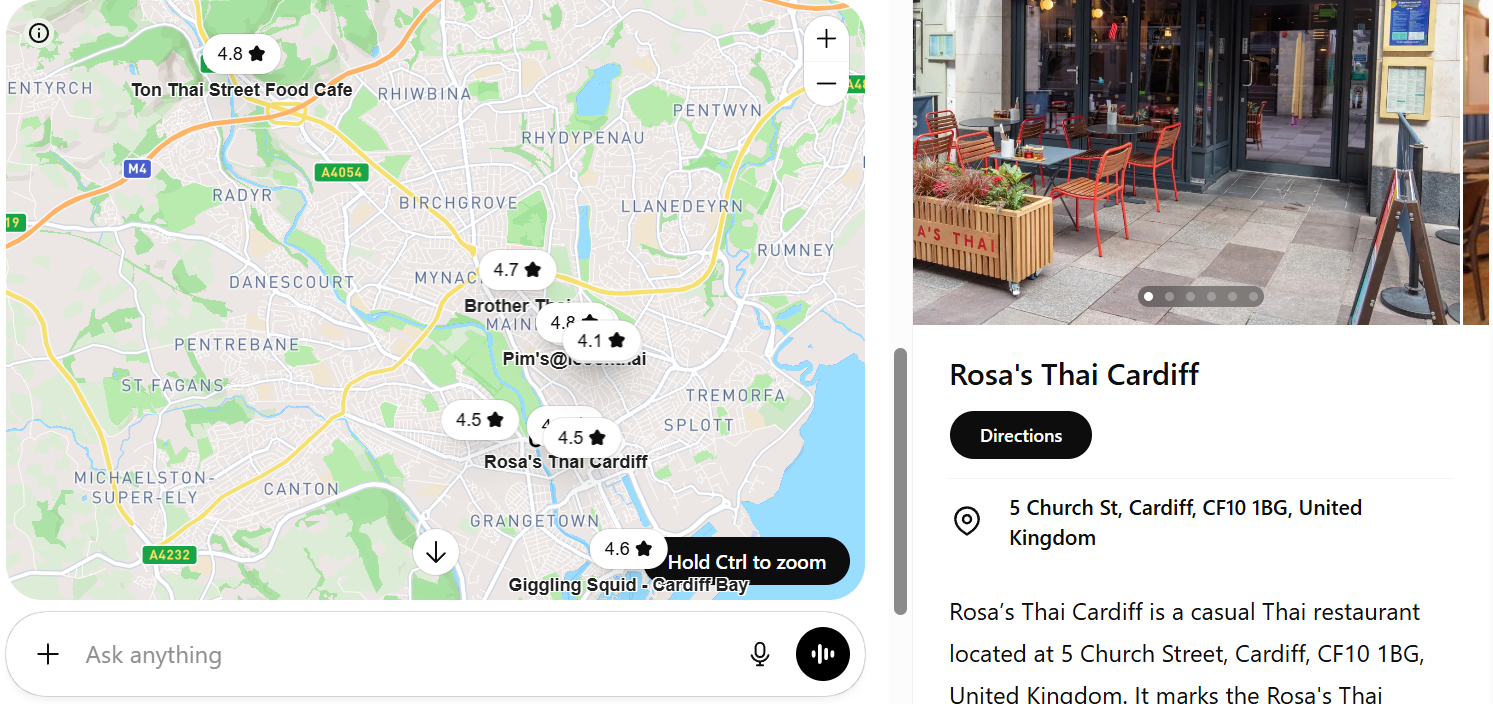
Although OpenAI states these panels are generated using third-party data sources, testing shows key details, such as website URLs and direction are often pulled from Google Business Profiles, with map links pointing to Google Maps.
There are still accuracy concerns, including low-quality images and occasional incorrect business information. Travel brands should review how their listings appear, paying close attention to website links, phone numbers, and descriptions. If issues appear, auditing your Google Business Profile, on-site content and structured data is a practical first step.
Google has also confirmed that its Gemini AI will display local results in new visual formats, reinforcing the need for travel brands to actively manage local data across platforms as AI-powered search continues to evolve.
3. Sponsored content is entering AI search
As AI-powered search continues to scale, monetisation is becoming unavoidable. In December 2025, Google expanded advertising into AI-generated responses, introducing sponsored placements within AI Overviews across 12 new countries and testing ads in AI Mode in the United States. These ads are clearly labelled as 'Sponsored' and appear separately from the AI-generated content, though sightings are still relatively limited.
Reports also suggest OpenAI is exploring advertising options within ChatGPT. Early concepts range from clearly marked sponsored placements to more integrated formats where paid content could influence AI-generated recommendations. If implemented, this would represent a major shake up in how travellers discover and compare destinations, hotels and experiences.
For travel brands already investing in Google Ads, this change may already be in effect. Campaigns with strong imagery and broad, high-intent keywords are most likely to surface within AI responses. However, reporting remains limited, with no visibility yet into impressions or clicks generated specifically from AI-powered results.
Looking ahead to 2026, travel marketers should expect advertising opportunities to expand across AI platforms. Monitoring how sponsored content appears, and how transparently it is labelled, will be critical as AI-driven discovery becomes a larger part of the travel planning journey.
4. New Google Search Console features
Google continues to enhance Search Console, giving travel brands new ways to track and optimise site performance. If you haven’t already, setting up a Search Console account is essential for monitoring how your content appears in search results.
In December, new features included:
AI-powered reporting – Generate custom reports simply by describing the data you need, with filters, metrics and date ranges applied automatically.
Social channel insights – Adds visibility data from a site’s social networks (currently limited testing) to the Insights report.
Weekly and monthly views – Performance graphs can now display weekly or monthly data, making trend analysis easier.
This builds on previous updates we covered in our December 2025 SEO news roundup, including custom annotations, which let travel brands log key events such as: new holiday destinations, seasonal offers, cruise routes or major campaigns. Combining these tools makes it far easier to analyse performance changes against promotions, seasonal trends and Google updates, helping you refine your strategy for 2026.
That's all for now - see you next month!


