Welcome to our monthly roundup of the latest pay-per-click news.
1. Google is testing Search campaigns in AI Mode
Google has been testing whether tradition Search campaigns can appear in AI Mode by adding exact and phrase match keywords.
This would mean that you may not necessarily need AI Max or Performance Max to start appearing in AI Mode. The experiment gives Search campaigns a path into AI Mode when a user’s query shows clear intent.
This was first spotted by Anthony Higman, who said he confirmed the behaviour across multiple campaigns and tests.
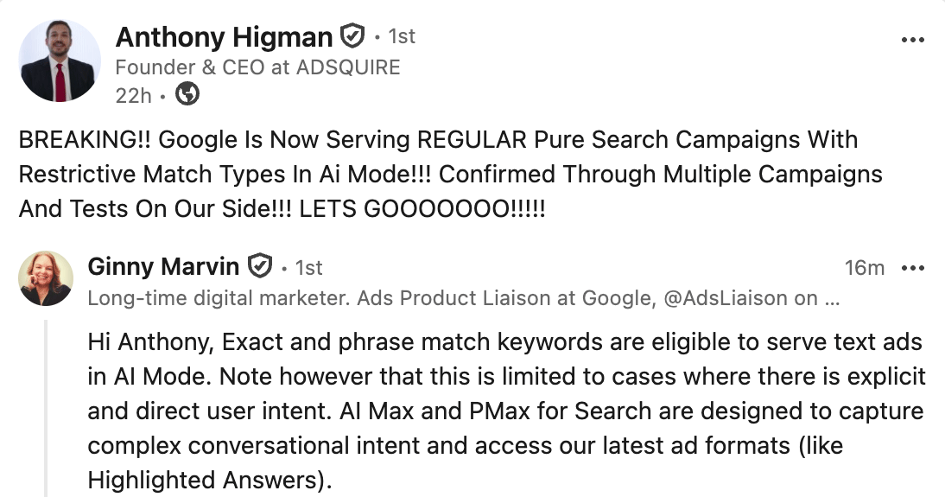
Ginny Marvin notes that exact and phrase match keywords can trigger text ads in AI Mode only in cases where Google identifies 'explicit and direct user intent’.
This shows that Google is testing whether traditional Search campaigns can also appear in AI Mode, rather than limiting it to newer campaign types.
This can be important for the travel industry because users often have more complex searches and can be looking for specific destinations, dates, hotels or experiences. If Google starts matching these high-intent searches with traditional Search campaigns in AI Mode, it could give travel advertisers another way to reach users further down the booking journey.
2. Pinterest turns visual search into a new ad opportunity
Pinterest is introducing Visual Search Ads as a new format that allows advertisers to bid for prominent places as users visually search, compare and move closer to making a purchase. It can appear within Pinterest Search results and closeups combining keyword relevance with visual understanding of the images and user intent.
Pinterest is trusting that AI-powered visual search can unlock a different intent based on what they are looking and not just what they’re typing. The ads are powered by Pinterest Intelligence, the company’s AI technology for understanding images, products, tastes and intent. Pinterest says this technology uses those signals to understand what users are interested in and create targeting opportunities for advertisers.

The way it works is by allowing advertisers to bid for a top response and send users straight to their websites, giving brands a performance placement while users are still looking and deciding what they want.
This could be helpful for travel brands as people often use Pinterest to research destinations, hotels and experiences before they know exactly what they want to book. Visual search could give advertisers another way to reach users during their research stage.
3. OpenAI Expands ChatGPT Ads
OpenAI is testing 'Sponsored Agents', which will allow users to start a separate, clearly labelled conversation after they have seen an ad. The user will be able to explain what matters to them, ask follow-up questions about different features and then follow a link to the business’s website when they’re ready to take the next step. This will make it easier for users to understand whether the product is right for them.
This will be helpful for travel ads where users normally have a lot of questions before making a booking. Being able to ask follow-up questions and compare different options could help users get a better understanding of the option before deciding whether to take the next step.
A key distinction is that Sponsored Agents are separate from ChatGPT’s independent answers and from the user’s original ChatGPT conversation.
Furthermore, OpenAI is integrating ChatGPT Ads with HubSpot and Shopify as their first CRM and ecommerce partners. Businesses managing customers in HubSpot can now connect a ChatGPT ads account and track performance and follow up on leads directly in HubSpot.
4. Google Ads’ new Spend Benchmarks report
Google Ads is giving advertisers a way to see how their spending and performance compares to other businesses it considers similar to theirs. A spend benchmarks report appears in the Google Ads account Overview.
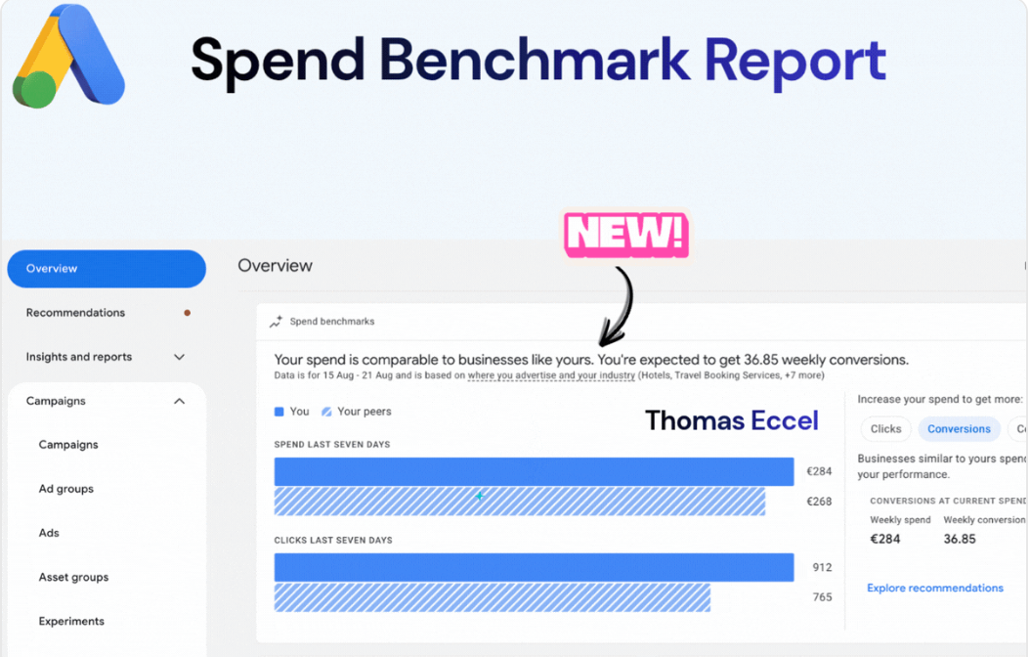
This update was spotted by Thomas Eccel who shared spotting the new feature on LinkedIn.
Google says the comparison takes into account factors including the industry and the ads placements. But the businesses Google considers similar are not necessarily comparable ones. Margins, average order value, customer lifetime, growth strategies can all differ.
So, while the report could give advertisers a useful benchmark, it’s important to look at the data alongside your own business goals and performance.


