Welcome to our monthly roundup of the latest pay-per-click news.
1. ChatGPT Ads introduce Target CPA and Target CPC bidding
OpenAI is changing the bidding options available in ChatGPT Ads from 9th November, introducing Target CPA and Target CPC.
The new options will replace Max Bid and Max CPC for new campaigns. The difference is that you will now be able to set an average cost target instead of a maximum bid for individual auctions.
Target CPA will be available for conversion campaigns. Target CPC will be available for click campaigns. Unlike Max CPC which sets a limit on individual bids, Target CPC allows the system to bid above or below the target depending on the auction, while working towards the average CPC.
Existing campaigns will continue using their current bidding strategies for now, but you can choose to move across to the new options. Max Bid and Max CPC will be retired on 1st January 2027.
2. AI-generated summaries within search ads
Google is testing AI-generated summaries above and within its search ads. The test shows an AI-generated summary above a group of sponsored ads, showing information about the ads appearing in the results. Individual ads are also displaying additional AI-generated descriptions underneath their existing ad copy.
This was spotted by Brodie Clark, who shared examples of the new format.
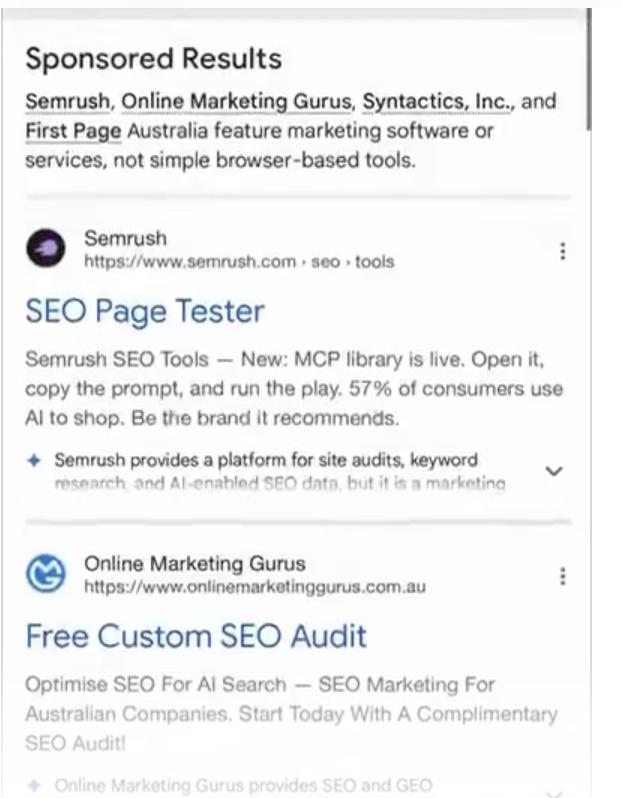
This means users could see additional information about a business before clicking through to its website, rather than relying on just the headlines and descriptions. We still need to wait and see whether Google rolls this out more widely and how much control advertisers will have.
3. Google AI Mode starts showing ads in follow-up conversations
Google’s multiturn ads are now appearing in AI Mode, allowing sponsored placements to show during follow-up questions rather than just the initial search. The feature was announced by Google in October but seems to now be appearing in the US.
For example, someone researching a product might start with a general question before asking about specific features or prices. Ads can then appear as the conversation develops and the user becomes more specific about what they are looking for.
Google has confirmed that these ads will be clearly labelled as ‘Sponsored’. Sponsored results seem to appear even in the third and fourth follow-up questions, suggesting that advertising can continue throughout longer conversations.
This could be particularly relevant for the travel industry. Someone planning a holiday might start by asking where to go in Europe before moving to questions about the best time to visit, accommodation options and flight prices.
4. Google Ads introduces two search terms match type columns
Google Ads has introduced two separate columns for search term match types. The two columns are:
- Search terms match type
- Search terms match type (Keywords)
Google Ads Liaison Ginny Marvin clarified that the two columns relate to different areas of the platform. The existing column, now renamed Search terms match type (Keywords), relates to the segmentation available in the Keywords tab. The new Search terms match type column relates to the Match type column within the Search terms tab.
There is also a small reporting limitation at the moment. To see all match types, including AI Max, advertisers currently need to include the Search term column in their Report Editor reports. Google is working on a fix for this.
This should make it easier to understand how searches are matching against keywords and where the data is coming from.


